
The biologist had a map spread across the hood of her truck, a topographic printout with blue arrows drawn on it in marker, and she was explaining water flow to me in the parking area behind the ranger station in a way that assumed I had been following this story for years. I had not been following it for years. But I had asked the right question, which was why the sawgrass prairie south of the Tamiami Trail looked different this October than it had looked two Octobers before, and she had decided the right question deserved a real answer.
The arrows on her map showed water moving south. That was the point. Water moving south, toward Florida Bay and the Gulf, the way it had moved for thousands of years before the drainage canals and the levees and the agricultural demands of a century of Florida development rerouted it east and north and held it in management cells where it could be metered out in controlled pulses that satisfied everyone and served nothing. The Comprehensive Everglades Restoration Plan, which has been in motion in various forms since 2000 and which represents something close to sixty billion dollars in projected expenditure over a period of decades, is essentially an attempt to make the water go south again. To restore the sheet flow. To give the ecosystem back the hydrology it built itself around over ten thousand years.
Most Floridians, as the biologist put it with the flat affect of someone who has stopped being surprised by this, think the Everglades is a swamp that floods sometimes.
I had come down to Everglades City that week not specifically to report on the restoration, which is the largest ecological infrastructure project in American history by most measures and which receives, in the national press, roughly the attention of a regional zoning dispute. I had come because it was late October, the stone crab season had just opened, and I wanted to be at Triad when the first claws came in. I wanted to watch the waterfront come back to life after the long dead weight of summer. But the biologist’s map stayed with me, and the arrows on it, and the particular patience required to believe that a project this large and this slow might actually work.
What the restoration requires you to understand is that the Everglades is not a place in the way that most protected places are places. It is a process. A very slow, very wide, very shallow river moving across a limestone plain from the Kissimmee basin south to the sea, no more than a few inches deep across a watershed that covers eighteen million acres at its historical extent. The diversity of life it supports, from the roseate spoonbills I have watched working the shallows at dawn to the sawgrass prairies that stretch unbroken to the horizon to the mangrove estuaries that make the Ten Thousand Islands the nursery for everything that swims in the Gulf, is entirely dependent on the timing and volume and salinity of that water movement. Change the hydrology and you change everything downstream of it, and for a hundred years the hydrology has been changed in ways that the ecosystem has been quietly failing to accommodate.
The restoration is trying to change it back. Removing old water control structures. Building new storage reservoirs to capture the summer pulse and release it slowly through the dry season. Bridging the Tamiami Trail, the road I drive every time I come down here, to restore the sheet flow that the road’s earthen fill had been blocking for decades. The Tamiami Trail bridging project alone took fifteen years of planning and more than two hundred million dollars and produced a structure that most people who drive across it notice not at all.
The thing that unsettled me, the thing that forced me to revise what I thought I understood about this place, was a conversation I had with a man named Cortez who runs a small operation out of Chokoloskee and has been fishing these waters for thirty years. I had expected skepticism about the restoration from someone whose livelihood depends on the water as it currently exists. I had expected the particular wariness of a working fisherman toward projects designed by agencies that have never had to pull a living out of the thing they are managing.
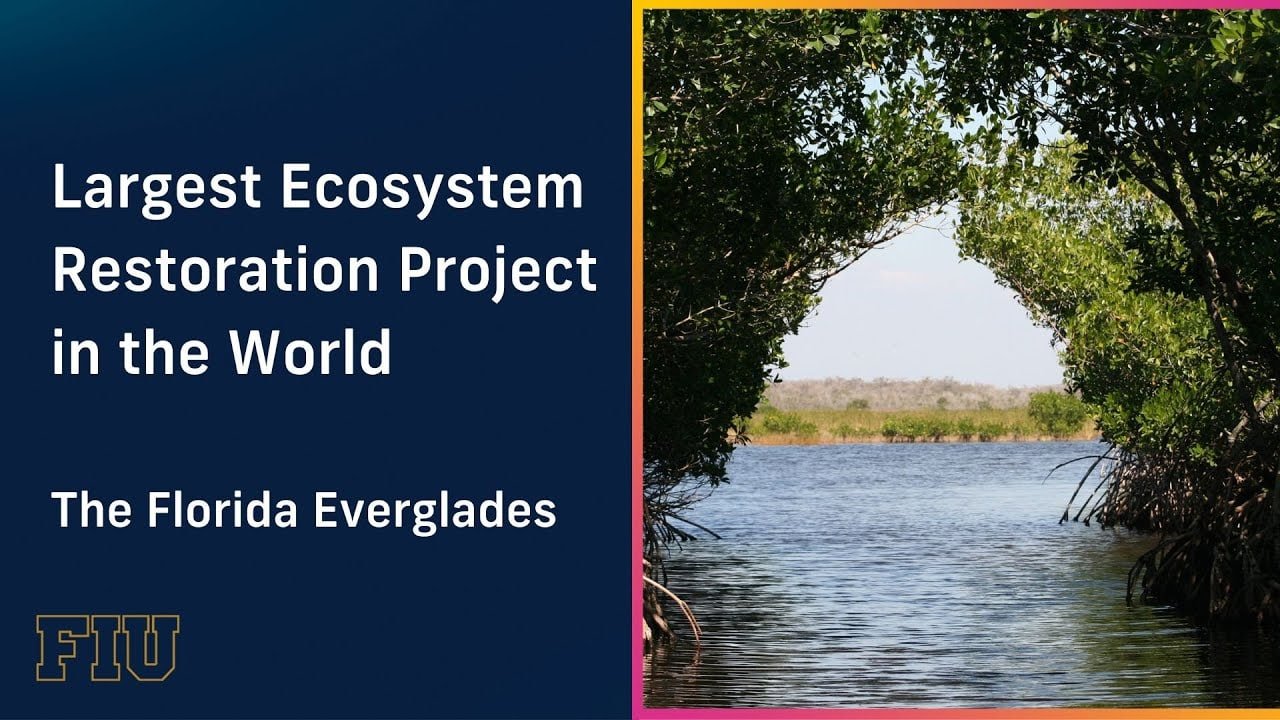
What I got instead was something more complicated. He told me the fishing had changed already. Not dramatically, not in ways he could prove, but in the quality of the nursery waters, in the populations of certain species in certain places, in the salinity of channels that had been brackish for as long as he could remember now running slightly fresher in the wet season. He was not prepared to say the restoration was working. He was not prepared to say it wasn’t. He watched the water the way the biologist watched her map, with attention that was not hopeful but was not resigned either.
What I keep thinking about is the scale of attention this project deserves and the scale of attention it actually receives. Sixty billion dollars. Decades of coordinated effort across federal and state and tribal and local jurisdictions. An attempt to reverse a century of deliberate hydrological alteration across a watershed the size of a small country. And the dominant public narrative about the Everglades remains one of a flat and difficult and mosquito-plagued landscape that exists mostly as a backdrop for airboat tourism and a cautionary note about pythons.
The water is moving south again, in places, in small measures, in the incremental way that ecological restoration actually works when it is working. The biologist folded her map back along its creases and put it under her arm and looked out at the prairie.
The Everglades does not need a better story. It needs people who are willing to follow the one it is already telling, which is slow and technical and requires a tolerance for uncertainty about whether it ends well.
Most places that need saving do.
Donald Reeves writes about Everglades City the way the place deserves to be written about: without the brochure language, without the manufactured wonder, and without pretending that a town of 400 people sitting at the edge of a swamp is something it is not.
He has spent considerable time in Collier County’s oldest settlement, arriving during stone crab season when the waterfront smells of brine and work, and returning in the off-season when the tourists are gone and the town goes quiet in the particular way that only genuinely remote places can. He has paddled the mangrove tunnels of the Ten Thousand Islands, eaten at places with no hours posted on the door, and spoken at length with fishing guides who navigate these waters by memory rather than chart.
His writing on Everglades City FL covers everything from tidal fishing conditions and kayak trails to lodging, local history, and the complex past that most Florida travel content carefully avoids.
He writes to give readers the honest version.