
The spoonbill was standing in about four inches of water off the western edge of Chokoloskee Bay, and I had been watching it for long enough that my coffee had gone cold in the cupholder of the skiff. It was not doing anything dramatic. It was doing what roseate spoonbills do when nobody is filming them for a documentary, which is stand very still in brackish shallows and then move a few feet and stand still again, and the pink of it in the early light was not the hot cartoon pink you see in photographs but something quieter and stranger, closer to the color of the inside of a conch shell, and I kept waiting for it to do something I could describe and it kept refusing.
That is probably the most honest introduction I can give to what the Everglades does to the people who spend real time in it. It refuses description in a way that is not coy or mystical but simply biological. The scale is wrong for human comprehension. One and a half million acres of sawgrass and mangrove and cypress dome and tidal estuary is a number that means nothing until you are an hour into a paddle and the canopy has closed over your head and the GPS on your phone has started returning coordinates that do not match anything on the screen, and you realize that the concept of being lost has taken on a different quality out here, less inconvenient and more final.
I came down the Tamiami Trail into Everglades City for the first time in October, which is the particular hinge of the year when the summer tourists have gone and the stone crab season has not quite started and the town is in the process of becoming itself again after tolerating everyone else’s version of it. The road narrows. The signal drops. There is no traffic light, no chain anything, no moment at which the infrastructure of the contemporary American vacation announces itself. What there is instead is a small circle of a downtown around a traffic circle, a waterfront that smells at low tide like something ancient and productive, and a population that has been here long enough to have watched several different versions of Florida wash over them and recede.
I ate stone crab at Triad that first visit and I have eaten it there every time since, which is not a recommendation so much as an acknowledgment that when a place does something correctly for long enough it stops needing to be compared to anything. The claws come cracked, the mustard sauce is what it is, and the view from the waterfront tables is the Ten Thousand Islands beginning their maze in the middle distance, mangrove islands dissolving into each other at the horizon until the idea of a coastline stops making sense.
What surprised me the first time, and what I have since come to think of as the central misunderstanding most travel content perpetuates about this place, was how little the town resembles the version of itself that shows up in the nature photography. Those images are real, the light is real, the wildlife is genuinely as dense and strange and various as anything on the continent. But they are photographs taken from boats in the backcountry at dawn, and they do not include the town that makes those boats possible, the guides who know these channels by memory rather than chart, the families who have been working the water for three and four generations, the particular kind of community that forms in a place with one road in and the same road out.
I talked to a fishing guide one afternoon in the parking lot of the Rod and Gun Club, a man whose grandfather had built houses here after the war and whose father had survived the 1960 hurricane and who had himself watched Irma come through in 2017 and take the place apart with a methodical quality he described not with drama but with the flat precision of someone reporting something they have fully processed. He told me that the federal assistance had been slow and that the town had mostly put itself back together through a combination of stubbornness and mutual aid and the particular advantage of being a place where people already knew how to do things with their hands. He did not say this with pride exactly. He said it the way you state a fact about a place you know well enough not to romanticize.
That is what I think travel writing persistently fails to give Everglades City, and what the Everglades itself suffers from in a different register. The content economy wants the spoonbill photograph and the kayak-through-mangrove-tunnel reel and the golden-hour image of a fishing boat returning to dock, and those things are available here in genuine abundance, and they are also, each of them, a frame around a much larger and more demanding truth. The Everglades is the largest subtropical wilderness in the United States and it is also a working watershed that has been drained and redirected and argued over and partially restored for a hundred years, and Everglades City is a working town that has survived things that would have ended most places and has done so without much help from the broader world that occasionally remembers it exists.
The wildlife viewing is as good as it gets on this continent. I will say that plainly, without qualifications. Birding, fish diversity, the mammals and reptiles of the backcountry, the sheer biomass of a functioning subtropical estuary. None of it requires anything from you except the willingness to be somewhere with no signal and no itinerary and no expectation of being made comfortable.
What the Everglades asks is that you show up to it on its own terms. Most places that make that demand are not worth it. This one is.
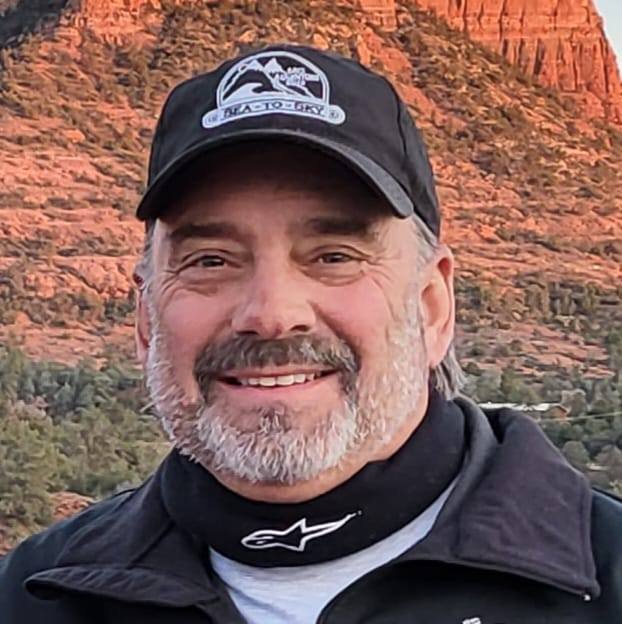
Donald Reeves writes about Everglades City the way the place deserves to be written about: without the brochure language, without the manufactured wonder, and without pretending that a town of 400 people sitting at the edge of a swamp is something it is not.
He has spent considerable time in Collier County’s oldest settlement, arriving during stone crab season when the waterfront smells of brine and work, and returning in the off-season when the tourists are gone and the town goes quiet in the particular way that only genuinely remote places can. He has paddled the mangrove tunnels of the Ten Thousand Islands, eaten at places with no hours posted on the door, and spoken at length with fishing guides who navigate these waters by memory rather than chart.
His writing on Everglades City FL covers everything from tidal fishing conditions and kayak trails to lodging, local history, and the complex past that most Florida travel content carefully avoids.
He writes to give readers the honest version.