
Something Large Moving Through the Dark
A fishing guide I know slightly, a man who has been running charters in the Ten Thousand Islands for longer than I have been coming here, told me once that he had seen a Florida panther cross the Tamiami Trail at four in the morning. Not near the road. On the road. Standing in the centre lane for long enough that he stopped the truck and cut the lights, and the animal turned its head and looked at him with the particular indifference of something that has not yet decided whether you are worth concerning itself about. Then it walked into the cypress on the south side and was gone. He said the whole thing lasted maybe twelve seconds. He said it in the flat, factual tone of a man reporting a weather event, something that happened and was noted and would not be forgotten but did not require elaboration. He had been driving that road for thirty years. It was the first time.
I think about that story when I read the panther numbers, which fluctuate depending on the methodology of the count but have not, in any survey I have seen, reached three hundred, and in several recent estimates sit closer to one hundred and twenty. Fewer than two hundred animals, in a range that once extended from Arkansas to the tip of this peninsula, now compressed into the southwest corner of Florida, pressed between the Gulf of Mexico and the expanding northern edge of the development corridor that has been moving south for as long as there has been money to move it.
The Everglades City conversation about the panther is not the conversation you read in conservation reports or in the pieces that get written when a panther is struck and killed on Alligator Alley, which happens with a regularity that should be more disturbing than the coverage suggests. The conversation here is quieter and more complicated, and it took me several visits before I understood that the complication was not what I had expected.
I had assumed, arriving with the assumptions of someone who had read the literature and understood the policy landscape, that the local relationship to the panther would be primarily one of pride, or of pragmatic indifference, or of the low-level resentment that sometimes exists in working communities toward the federal agencies that manage protected land and the legal apparatus that comes with it. I found some of that. What I did not expect was the grief.
Not performed grief. Not the grief of a conservation campaign. A woman I spoke to, someone who was born here and left for twenty years and came back after Irma because she could not stay away, told me that her father had seen a panther twice in his life, both times in the same hammock south of the Trail, and that knowing the animal was still out there somewhere in the cypress and the saw palmetto and the thick dark of the Big Cypress Preserve was, for him, a form of evidence that the world had not yet entirely simplified into something manageable and predictable and stripped of its old weight. She said it mattered to him in a way that was not about wildlife management or ecosystem services or any of the language that conservation uses to make itself legible to policy. It mattered the way certain things matter that you cannot fully explain without sounding like you are overstating the case.
The Florida panther needs large range. The males require territory measured in the hundreds of square miles, and the territory available to them is bounded to the north by development that is not retreating and to the east and west by roads that kill them with a consistency that wildlife crossings have helped but not solved. The Everglades, meaning the full complex of habitats from the Big Cypress through the park itself and down into the mangrove fringe where the town of Everglades City sits at the edge of the water, is the core of what remains. Not the whole of it. The core.
What the panther needs from this place is the thing the place is most under pressure to give up, which is its scale. The distance between things. The long uninterrupted stretches of habitat that have no function a developer can monetise, no amenity a visitor can book, no return on investment that a county commission can put in a report. The panther does not produce anything. It consumes territory and deer and feral hogs and occasionally a calf, and it moves through the dark on routes that predate every road and every deed and every survey map that has ever been drawn of this landscape, and it has been doing this for long enough that the land without it would be a different kind of place, diminished in ways that are real but difficult to quantify.
The morning after that conversation, I was out on the water before the light had fully established itself, the sky going from grey to pale gold at the tree line to the east, the mangroves still dark and motionless in the windless air. A mullet jumped somewhere behind the boat and the sound of it carried farther than it should have in the quiet. I was thinking about twelve seconds on the Tamiami Trail. About what it means to live in a town at the edge of the last habitat of something that almost is not.
The panther does not know it is a conservation symbol. It does not know there are fewer than two hundred of its kind. It knows the territory, and the dark, and where the prey is moving, and whether the thing that just stopped on the road ahead of it is a threat or merely an obstacle.
The question is not whether the Everglades can save the panther. The question is whether the people making decisions about this landscape understand what they are deciding about, or whether they are looking at a map and seeing something other than what is actually there.
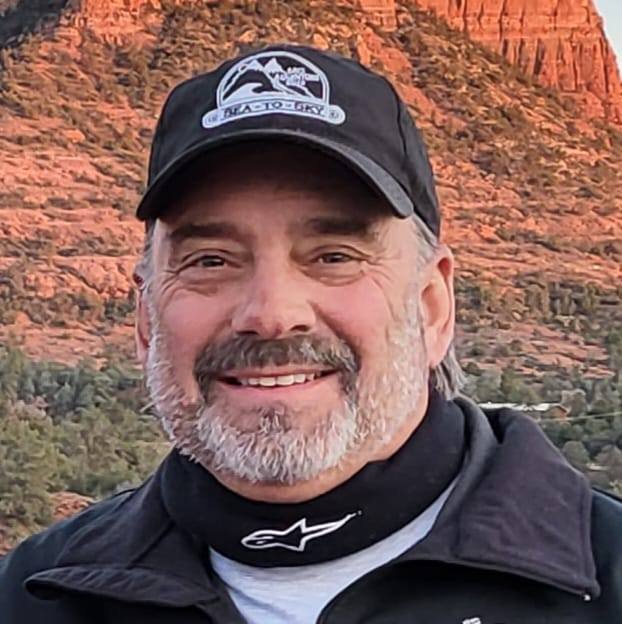
Donald Reeves writes about Everglades City the way the place deserves to be written about: without the brochure language, without the manufactured wonder, and without pretending that a town of 400 people sitting at the edge of a swamp is something it is not.
He has spent considerable time in Collier County’s oldest settlement, arriving during stone crab season when the waterfront smells of brine and work, and returning in the off-season when the tourists are gone and the town goes quiet in the particular way that only genuinely remote places can. He has paddled the mangrove tunnels of the Ten Thousand Islands, eaten at places with no hours posted on the door, and spoken at length with fishing guides who navigate these waters by memory rather than chart.
His writing on Everglades City FL covers everything from tidal fishing conditions and kayak trails to lodging, local history, and the complex past that most Florida travel content carefully avoids.
He writes to give readers the honest version.