
The Guide Who Does Not Have a Website
I found out about him the way you find out about most things that matter in Everglades City, which is by being in the wrong place long enough to end up in the right conversation. I was eating a late lunch at a place off Mamie Street that had four tables and a handwritten menu on a whiteboard, and the man at the table next to mine was talking to someone about the tide schedule for the following morning with the unhurried authority of a person for whom this information is purely operational. He was not performing knowledge. He was using it. I asked, after they had finished, whether he took people out. He looked at me for a moment. He said he had two slots open the following week if I could be at the ramp at six.
His name is not important here and I am not going to print it, because what I want to say about him is not a recommendation in the conventional sense. It is something closer to an observation about how good information travels in a place like this, which is slowly and personally and not through any channel that an algorithm can find.
The tour operators that appear first when you search for Everglades tours from your phone, which will probably stop getting signal somewhere around the turnoff from 41 if you are coming from Naples, have optimised for being found. That is not a criticism of them as individuals and it is not a claim that their tours are without value. Some of them are competent. A few are genuinely good. But the optimisation required to appear first in that search result, the review cultivation, the booking platform management, the social media presence, the paid placement, these things take time and attention that comes from somewhere, and where it tends to come from is the hours that would otherwise be spent on the water in the off-season, learning where the snook are moving when the water temperature drops, reading the subtle pressure changes that tell you something about where the birds will be feeding the following morning.
The guides who know these waters the way you know a house you have lived in for decades, by feel, by the particular sound a channel makes when the tide is running through it correctly, by the way the mangroves on the south side of a certain island bend slightly lower than they should and what that means about the bottom underneath them, these people are not easy to find through a screen. They exist at the edge of the information economy. Their reputations live in conversations at boat ramps and fish houses and the counter of the hardware store on Collier, and they spread at the speed of personal trust rather than the speed of a five-star review.
What surprised me, on that early morning with the man I am not naming, was not the wildlife. I had seen roseate spoonbills before. I had been in mangrove tunnels where the canopy closes overhead and the light turns green and strange and your sense of scale becomes unreliable. What surprised me was how differently the same physical space read when seen with someone who was not moving through it as a series of photographic opportunities. We stopped in a place that looked, to me, like an unremarkable junction between two channels, brown water and grey roots and a sky beginning to go pale at the edges. He cut the motor. We sat for a long time. Then he pointed at something I would not have identified as anything, a slight disturbance in the water near the root line, and said what it was and why it was there and what it told him about what the morning was going to do. The information was dense and specific and entirely unperformative. He was not explaining the Everglades to me. He was thinking out loud about a place he had been thinking about for forty years.
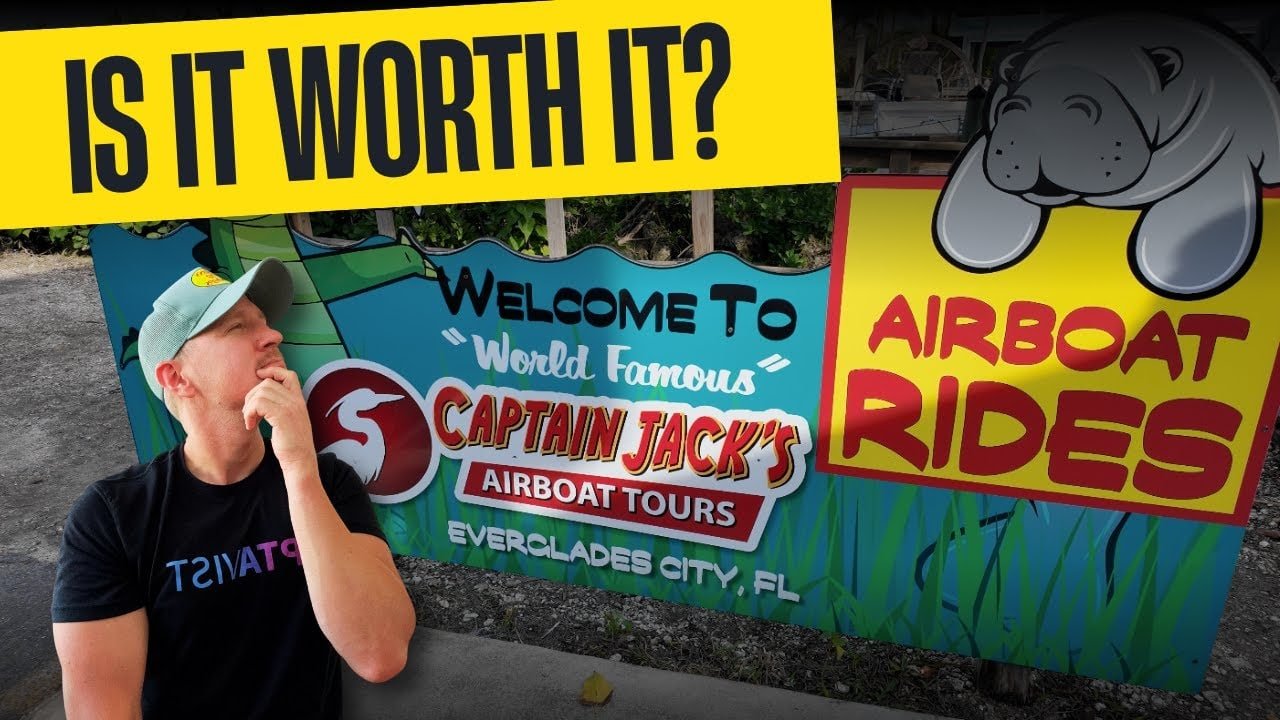
I have taken other tours here. One of them left from a large operator on the main road, with a covered boat and a narration that hit the same beats in the same order and answered questions about alligators with the practiced efficiency of someone who has answered the same question several thousand times. The wildlife appeared on schedule, more or less. The passengers photographed it. The narration told them what they were looking at and why it was significant. It was not dishonest. But it was the Everglades as a product, packaged and delivered and priced accordingly, and what it could not provide was the thing that makes this ecosystem genuinely arresting, which is the feeling of being inside something that does not acknowledge your presence or adjust itself for your benefit.
The travel content problem with Everglades City is a specific version of a general problem, which is that the internet rewards the findable rather than the good, and findability is a skill that is entirely orthogonal to the knowledge and attention that make a guide worth following into a mangrove tunnel at dawn. The first result in your search has a booking widget and a cancellation policy and high-resolution photographs of people having a good time on the water. The man who told me to be at the ramp at six has a phone number written on a piece of cardboard that someone gave me at a lunch counter.
Both things are true: the system will continue to reward the optimised, and the knowledge worth having will continue to move the way it always has in small working places, between people who are paying close enough attention to deserve it.
The water does not care which tour you booked. But you will.

Donald Reeves writes about Everglades City the way the place deserves to be written about: without the brochure language, without the manufactured wonder, and without pretending that a town of 400 people sitting at the edge of a swamp is something it is not.
He has spent considerable time in Collier County’s oldest settlement, arriving during stone crab season when the waterfront smells of brine and work, and returning in the off-season when the tourists are gone and the town goes quiet in the particular way that only genuinely remote places can. He has paddled the mangrove tunnels of the Ten Thousand Islands, eaten at places with no hours posted on the door, and spoken at length with fishing guides who navigate these waters by memory rather than chart.
His writing on Everglades City FL covers everything from tidal fishing conditions and kayak trails to lodging, local history, and the complex past that most Florida travel content carefully avoids.
He writes to give readers the honest version.