
The first alligator I saw from the car was not doing anything. That is almost always how it is. People expect drama from alligators and the animals decline to provide it, lying on the bank of the canal with the absolute stillness of something that decided millions of years ago that patience was the correct evolutionary strategy and has seen no reason since to revise that decision. It was just after six in the morning, the light coming in flat and pink from the east, and I was maybe forty miles into the Everglades on I-75 — Alligator Alley, the stretch of interstate that crosses the lower Florida peninsula from Fort Lauderdale to Naples through nothing but saw grass and water and sky — and the alligator was on the bank of the drainage canal that runs alongside the road, and I slowed down more than was probably safe for traffic and looked at it for as long as I could, and it did not move.
I have driven Alligator Alley perhaps twenty times over the years, mostly as a means to an end, the efficient route between the east coast and Everglades City that takes a hundred miles off the drive compared to going around through Miami. For a long time I treated it the way most people treat interstates: as a corridor rather than a destination, a span of time to be crossed with minimal attention while the mind occupies itself elsewhere. I was wrong about that for years before I understood I was wrong about it.
What changed was a conversation I had with a fishing guide named Marcus, who grew up in Everglades City and who drives Alligator Alley several times a week in both directions. I had made some offhand comment about the drive being monotonous, the way people do when they are performing familiarity with a place, and he looked at me with an expression that was not quite impatience and said: “You have to drive it at the right time.” He meant sunrise. He meant specifically the forty-five-minute window when the light is coming in low from the east and hitting the saw grass at an angle that changes what the grass is, turns it from a flat green surface into something dimensional and alive, individual blades catching the light differently depending on their height and angle and the degree to which last night’s dew is still on them. He meant the hour before the heat starts and the air over the road begins to shimmer and the landscape flattens back into the version of itself that most people see.
I drove it at sunrise the following morning and did not speak or listen to anything the entire way and arrived in Everglades City two hours later having seen more of the Everglades than I had absorbed in several years of driving the same road.
The thing that road trip content consistently misses about Alligator Alley is that it is not a scenic drive in the conventional sense. There are no overlooks. There are no landmarks of the type that appear on itinerary lists and generate the photographs that subsequently circulate as evidence that a road trip was worthwhile. The Fakahatchee Strand is off to the south, unreachable from the interstate itself. The Big Cypress National Preserve stretches away to the north in a way that is visible and not visible, present as a quality of the air and the sky rather than as a feature you can point at. What the road offers is something that our vocabulary for road trip experiences is not particularly equipped to describe: an extended encounter with scale. The Everglades are not large in the way that mountain landscapes are large, with the drama of elevation and the clear legibility of distance. They are large in a way that is harder to process, flat and horizontal and continuous, the saw grass running to every horizon without interruption, the sky above it wider than it seems like it should be given that the same sky covers everything else.
Driving through that at sunrise, when the light is still directional and the shadows are long and the surface of the water in the roadside canals is going from black to copper to a particular shade of greenish gold, produces a feeling that I have had difficulty naming accurately. It is not awe in the conventional sense, nothing that makes you want to pull over and take a photograph. It is something quieter and more internal, the sensation of being in the presence of something that is not organized around your experience of it and does not require your acknowledgment to continue being what it is.
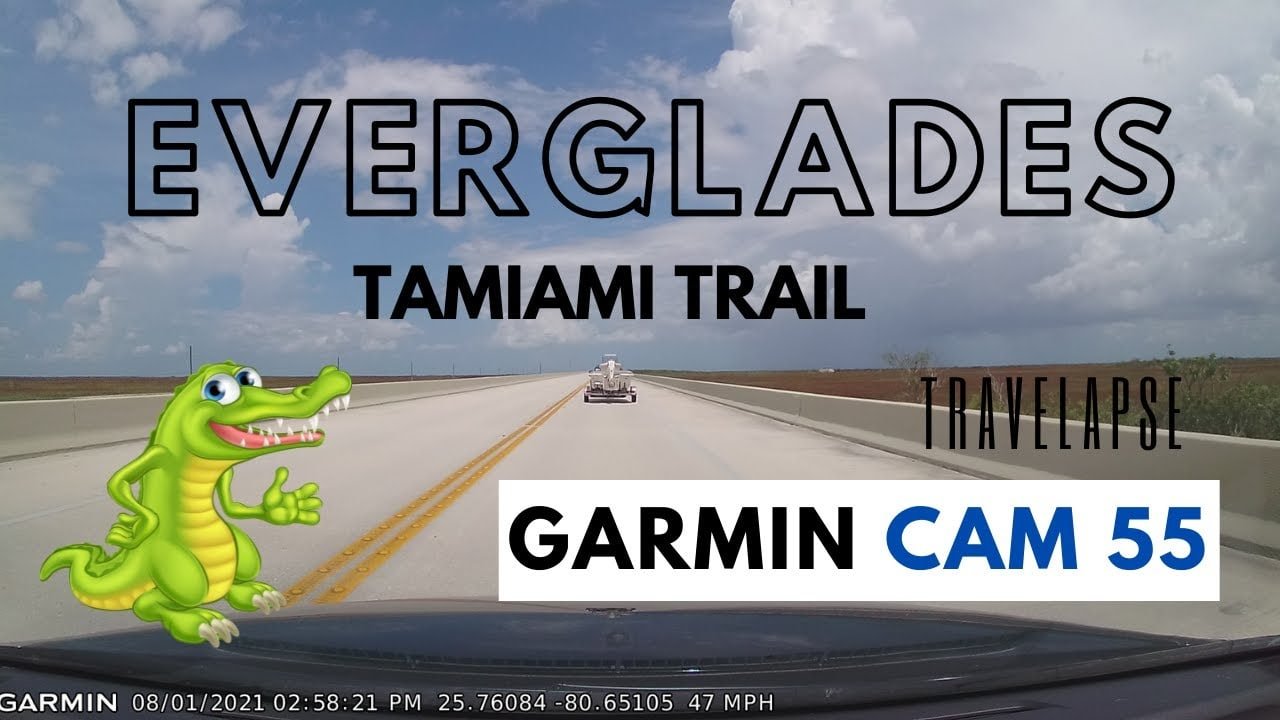
The alligators help with this, oddly. They are everywhere along the road, in the canals and on the banks, and they are doing what they were doing before the road existed, which is nothing in particular, and their indifference to the cars passing forty feet away is not hostile or dramatic but simply complete. They occupy the landscape on its own terms. You are passing through. That distinction is available on other roads, but it is rarely this clear.
I made a stop once, at one of the two rest areas on the alley — concrete structures dropped into the middle of the marsh with the minimal concession to human comfort that interstate rest areas provide — and stood outside in the morning air, which smelled like water and vegetation and something underneath both that I cannot identify and have stopped trying to, and looked north across the saw grass to where the horizon was doing something complicated in the early light.
The road trip writing that covers Florida focuses, almost entirely, on the coasts. The Keys to the south, the Gulf towns to the west, the Atlantic coast to the east. Alligator Alley does not appear in these itineraries because it does not produce the kind of content that travel writing is currently organized to produce. There is nothing to eat on it. There is nothing to buy. It does not resolve into an arrival that feels earned in the way that coastal destinations feel earned.
What it offers is the interior. The actual interior of a landscape that most people see only from the edges, and which looks different, is different, when you are in the middle of it at the right hour with enough patience to let it be what it is rather than what you expected.
Marcus knew that. He drives it twice a week and he has not stopped noticing it. That, I think, is the whole point.

Donald Reeves writes about Everglades City the way the place deserves to be written about: without the brochure language, without the manufactured wonder, and without pretending that a town of 400 people sitting at the edge of a swamp is something it is not.
He has spent considerable time in Collier County’s oldest settlement, arriving during stone crab season when the waterfront smells of brine and work, and returning in the off-season when the tourists are gone and the town goes quiet in the particular way that only genuinely remote places can. He has paddled the mangrove tunnels of the Ten Thousand Islands, eaten at places with no hours posted on the door, and spoken at length with fishing guides who navigate these waters by memory rather than chart.
His writing on Everglades City FL covers everything from tidal fishing conditions and kayak trails to lodging, local history, and the complex past that most Florida travel content carefully avoids.
He writes to give readers the honest version.