
The traps had been in the water for four days when I got to the dock at five in the morning to watch the boats go out for the pull. The air smelled of brine and outboard exhaust and something underneath both of those things, something organic and low and tidal that is specific to this waterfront in October and that I have not encountered anywhere else on the Gulf Coast with quite this particular intensity. It is the smell of the season beginning. The boats were running without lights and the men on them moved without talking much, which is the way people move when they have done something so many times that speech would be redundant. The water was black and perfectly flat. By the time I could see the channel markers the first boats were already out of sight.
The stone crab season in Everglades City runs from the fifteenth of October to the fifteenth of May, and those six months are the town’s actual year. The other six are the pause between years, the September wait when the traps sit stacked on the docks and the waterfront smells only of salt water and heat and the particular quiet of a place that has finished one thing and not yet begun the next. I have been here in that pause and I have been here when the season is running and they are genuinely different towns, not in their geography or their population but in their atmospheric density, the sense that something is happening underneath the surface of the ordinary day.
Everglades City lands more stone crab than anywhere else in the state, which makes it the stone crab capital of Florida, which makes it the stone crab capital of the country, because nowhere else in the country harvests stone crab in any significant commercial quantity. This is not a title the town promotes aggressively. The Seafood Festival in February draws its crowd and the restaurants that cater to visitors offer the claws on their menus and the subject comes up naturally enough. But the industry itself, the actual work of it, is not oriented toward being observed. It happens before most people are awake and returns to the dock at hours that depend on the tides and the trap locations and the pace of the pull, and what it produces goes into coolers and from there into the distribution chain that ends, eventually, at the menu of a restaurant in Miami or Atlanta or New York where the price per claw reflects a journey the customer has no particular reason to trace back to its origin.
The thing that shifted my understanding of all this came from a conversation I had not gone looking for. I was at the waterfront in the late morning of the season’s second week, watching a boat unload, when the man doing the unloading mentioned, without prompting, what the dock price for stone crab claws had been running that morning. I had eaten stone crab the previous evening at a place near the waterfront, good claws, chilled properly, with the mustard sauce that is the conventional accompaniment and that I have come to think of as optional when the crab itself is fresh enough. I had paid what seemed like a fair price for a plate of them. The gap between what he described as the dock price and what I had paid the night before was not the gap between cost and reasonable markup. It was the gap between a working fisherman’s morning and a supply chain’s patience, and it was larger than I had thought about before he said it.
I am not making an argument here about what stone crab should cost or who is at fault for the distance between the dock and the restaurant. The economics of perishable seafood are genuinely complicated and the cold chain and the distribution and the labor at every point between the trap and the plate all cost something real. What I am saying is that there is a version of stone crab that gets written about in food media and ordered at fine dining establishments as a luxury ingredient associated vaguely with Florida and the ocean, and there is a version of stone crab that means a man on a boat before sunrise pulling traps in October air that still has some of summer’s weight in it, and the two versions are rarely brought into proximity with each other in a way that serves the second one honestly.
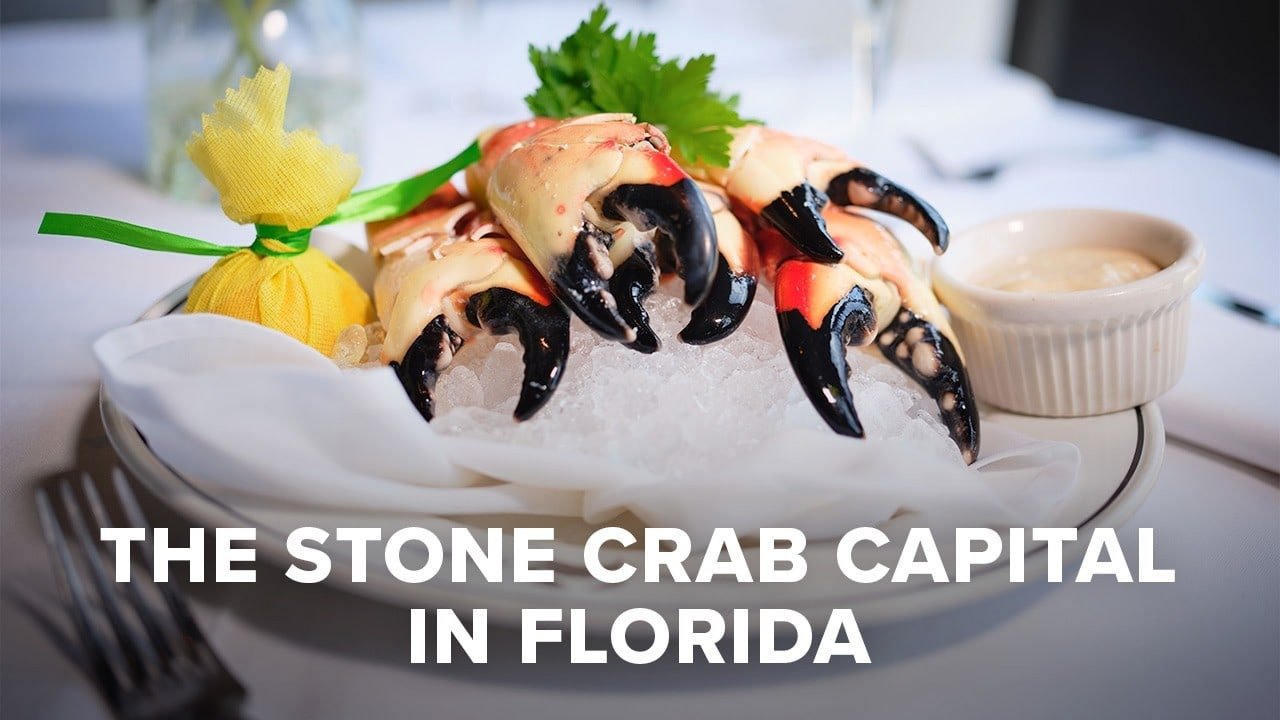
What Everglades City has that most fishing towns do not is the traceability. If you are standing at Triad Seafood when the boats come in, you can watch the claws come off the boat and into the cooler and you can buy them in the same transaction, which is as close to the origin as most people will ever get with any seafood they eat. That proximity is not marketed as a selling point, which is one of the things I find genuinely unusual about this place. It is simply available, if you are here and paying attention, in the way that most true things are simply available rather than announced.
The boats were back at the dock by noon on the day I had arrived early enough to watch them leave. The men on them were not demonstrative about having finished. They unloaded and cleaned and made notes about which traps needed attention and drank coffee from a thermos and moved with the same efficiency they had moved with in the dark of five in the morning. The season would run for another four months and the work would repeat itself with the consistency that serious work has when it is organized around something that matters.
The stone crab does not care about its reputation in fine dining. It lives in the channels and the shallow bays between the keys, and twice a year it grows back the claw that was taken, and the fishermen who know where it lives have been learning those locations for generations.
That continuity is the actual thing. Everything else is downstream of it.

Donald Reeves writes about Everglades City the way the place deserves to be written about: without the brochure language, without the manufactured wonder, and without pretending that a town of 400 people sitting at the edge of a swamp is something it is not.
He has spent considerable time in Collier County’s oldest settlement, arriving during stone crab season when the waterfront smells of brine and work, and returning in the off-season when the tourists are gone and the town goes quiet in the particular way that only genuinely remote places can. He has paddled the mangrove tunnels of the Ten Thousand Islands, eaten at places with no hours posted on the door, and spoken at length with fishing guides who navigate these waters by memory rather than chart.
His writing on Everglades City FL covers everything from tidal fishing conditions and kayak trails to lodging, local history, and the complex past that most Florida travel content carefully avoids.
He writes to give readers the honest version.