
The waterline is still visible on the wall of the building on Copeland Avenue if you know where to look. Not marked, not commemorated, just there, a faint horizontal stain at about chest height where the storm surge from Irma sat for the better part of two days in September 2017 before it receded and left behind everything a wall of saltwater leaves behind: the mud, the smell, the particular destruction of things that were built to last in a place that floods sometimes but not like that. The woman who owns the building pointed it out to me the way you point out something that has become so familiar it barely registers anymore. Then she went back to what she had been doing, which was inventory.
I have been trying to understand Everglades City’s relationship with catastrophe for several years, and I keep arriving at the same problem, which is that the town does not have a relationship with catastrophe in the way that most places have relationships with hard things. It does not narrate the difficulty. It does not build a recovery story with a beginning and a middle and a triumphant end. It absorbs the thing, adjusts, and continues, and if you ask the people who were here what the secret is, they look at you with the expression of someone being asked to explain water.
Irma hit Everglades City as a Category 3 equivalent on September 10th, 2017. The storm surge was the primary damage mechanism, not the wind, and it reached nine feet in some parts of town. The entire population had evacuated, or nearly all of it. When people came back, they came back to a town that was, in the immediate sense, unlivable. The power was gone. The roads in were compromised. The municipal infrastructure that a town depends on to function, water, sewage, communications, had been disrupted to a degree that, in most communities, triggers a prolonged dependence on external assistance.
What happened in Everglades City was different, and the difference is not something that lends itself to a single explanation, which is why I have heard so many explanations and found none of them fully satisfying. The mutual aid that organized itself in the first days after the storm was not organized by anyone. It was the spontaneous expression of a community small enough that everyone knows what everyone else needs and nobody waits to be asked. Generators appeared where generators were needed. Equipment appeared. People with boats went to check on people with boats, and people with chain saws went to check on roads, and the work of making the town minimally functional again was distributed across the community in a way that had no coordinator because it did not need one.
The federal response was slow. I have heard this from enough people in enough different ways that I take it as established fact rather than complaint. FEMA arrived, eventually, with the particular institutional energy of an agency that has procedures for disasters and found in Everglades City a disaster that had already begun resolving itself by the time the procedures arrived. The town’s relationship with federal agencies is long and complicated and not always warm, and Irma did not improve it, but it also confirmed something that the people here had known for a long time, which is that the distance between Everglades City and the nearest center of institutional power is not only geographic.

What I had not understood before I started talking to people who were here, and stayed here, and rebuilt here, was the degree to which that distance is not experienced as abandonment but as a form of freedom. A fishing guide named Earl, who was born in Chokoloskee and whose family has been working these waters for three generations, told me that the hardest thing about the recovery was not the physical damage but the interference. The well-meaning outside help that came with its own assumptions about how recovery should look and what the town should become afterward. He said they wanted to help rebuild Everglades City into something more resilient, and what he kept trying to explain was that the resilience was already there. It was the thing that had been here the whole time. It was not a quality to be installed.
The town’s resilience is not a product of its hardship, though it has had hardship in abundance. It is a product of its scale, its isolation, its economy, and the self-selecting nature of a community where the people who remain are, by definition, people who have decided that remaining is worth what it costs. The cost is real. The infrastructure is incomplete. The nearest hospital is forty miles away. The schools draw children from a catchment so small that closures are a permanent administrative threat. The opportunities available to a young person who grows up here and wants something the town cannot provide require leaving, and leaving from here means leaving in a way that most small towns do not require.
The people who stay, who choose to stay, who return after trying somewhere else and find they cannot leave for good, are not staying because they have no options. They are staying because they have made a specific calculation about what a life is for, and the calculation comes out differently here than it does elsewhere, and they are not interested in explaining it to people who have not made it.
The waterline on the building on Copeland Avenue is not a memorial. It is just a mark left by water. The town’s resilience is not a story it tells about itself. It is simply what happens when people have been somewhere long enough to know there is no one else coming.
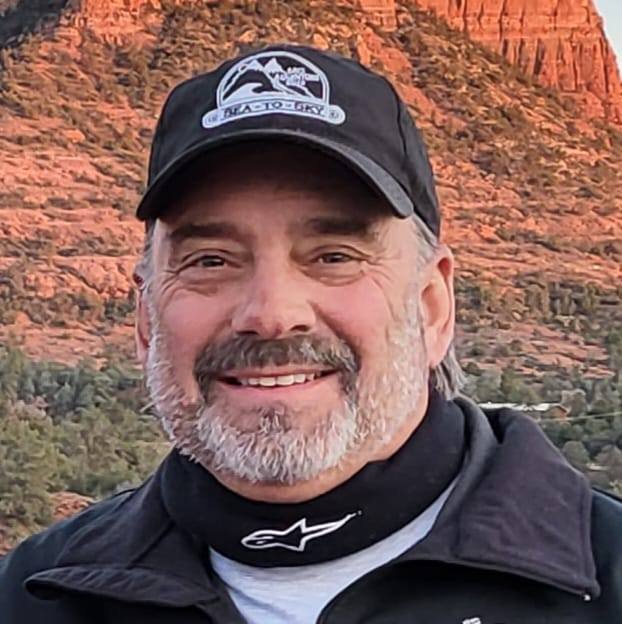
Donald Reeves writes about Everglades City the way the place deserves to be written about: without the brochure language, without the manufactured wonder, and without pretending that a town of 400 people sitting at the edge of a swamp is something it is not.
He has spent considerable time in Collier County’s oldest settlement, arriving during stone crab season when the waterfront smells of brine and work, and returning in the off-season when the tourists are gone and the town goes quiet in the particular way that only genuinely remote places can. He has paddled the mangrove tunnels of the Ten Thousand Islands, eaten at places with no hours posted on the door, and spoken at length with fishing guides who navigate these waters by memory rather than chart.
His writing on Everglades City FL covers everything from tidal fishing conditions and kayak trails to lodging, local history, and the complex past that most Florida travel content carefully avoids.
He writes to give readers the honest version.