
Oklahoma City residents use 6 core city services on a recurring basis. These are gas pricing, trash and recycling collection, bulk waste pickup, snow route planning, hazardous waste disposal, vehicle tag renewal, and building permits. This page covers the current details for each service in one reference.
For related reading, see How Far Is Oklahoma City from Dallas and Other Major Cities?.
What Are the Current Gas Prices in Oklahoma City?
The average gas price in Oklahoma City is $3.46 per gallon for regular unleaded as of late May 2026, according to AAA data. Oklahoma ranks as the cheapest state for gas in the United States, ahead of Kansas ($3.50), Arkansas ($3.57), and Georgia ($3.58). The all-time high for Oklahoma City was $4.72 per gallon on June 15, 2022.
Gas prices change daily. The table below shows recent historical Oklahoma gas averages for context.
| Year | Oklahoma Average (Regular) | U.S. Average |
|---|---|---|
| March 2025 | $2.59/gallon | $3.02/gallon |
| March 2024 | $3.03/gallon | $3.45/gallon |
| March 2023 | $2.92/gallon | $3.43/gallon |
| March 2022 | $3.79/gallon | $4.29/gallon |
| March 2021 | $2.68/gallon | $2.87/gallon |
Where Can Oklahoma City Residents Find the Cheapest Gas?
2 tools track real-time gas prices across Oklahoma City stations. These are GasBuddy (gasbuddy.com) and the AAA Daily Fuel Gauge Report. GasBuddy updates prices from over 150,000 stations across the country and covers all OKC ZIP codes. The cheapest stations on any given day can be $0.30 to $0.50 below the metro average.
What Is the Trash Schedule in Oklahoma City?
Oklahoma City provides 3 types of residential waste collection. These are weekly trash pickup, bi-weekly recycling, and monthly bulk waste collection. The Solid Waste Management Division serves over 220,000 single-family households.
| Collection Type | Frequency | Cart Color | Cart Size |
|---|---|---|---|
| Trash | Weekly | Blue | 96-gallon |
| Recycling | Every other week (same day as trash) | Green | 96-gallon |
| Bulk waste | Monthly (first Monday) | No cart required | Curbside loose |
The standard monthly service rate is $28.48 as of November 2025. This rate covers 2 Big Blue trash carts, 1 Big Green recycling cart, and monthly bulk waste collection. The rate increases to $30.01 per month in November 2026.
4 cart placement rules apply on collection day:
- Place carts at the curb by 6:00 AM on your assigned day
- Return carts by 10:00 PM the same day
- Leave 3 feet between carts and 5 feet from obstacles (mailboxes, trees, utility poles)
- Carts must face the street with lids opening toward the street
All trash must be bagged inside the Big Blue cart. Recyclables go loose in the Big Green cart, never in plastic bags. Glass is accepted in the recycling cart. Find your specific collection day at okc.gov/departments/utilities/trash-recyling-bulk-waste/trash-recycling-pick-up.
When Is Oklahoma City Big Trash Day?
Big trash day in Oklahoma City falls on the first Monday of each month. Crews have a 3-day window to complete pickup after that date. No registration is required for standard bulky items. The first 4 cubic yards are included at no additional charge. Excess loads carry a $14.61 fee.
Accepted bulky items include:
- Large household appliances (washers, dryers, stoves, dishwashers)
- Furniture (sofas, mattresses, chairs, tables, cabinets)
- Refrigerators and freezers (call first; doors must be removed)
For refrigerators, freezers, or any item containing Freon, call (405) 297-2833 to schedule during your regular bulky waste window. Place all items loose at the curbside with approximately 5 feet of clearance on all sides. Find the bulk waste schedule at okc.gov/departments/utilities/trash-recyling-bulk-waste/bulk-waste-pick-up.
When Are Oklahoma City Free Landfill Days?
Oklahoma City holds 2 free landfill days per year, typically in May and September. The September 2025 free landfill day took place on September 7, 2025. Each household may bring 1 vehicle load up to 1 ton and 1 trailer up to 16 feet. A current OKC trash bill or eBill account confirmation is required at entry.
Accepted items on free landfill days include furniture, household appliances, bagged leaves, and landscape waste. Items not accepted include hazardous waste, tires, motor oil, automotive parts, car batteries, propane tanks, electronics, and appliances containing Freon.
How Does Oklahoma City Handle Holiday Trash Delays?
When OKC observes a city holiday, trash and recycling collection slides one day later for all routes on and after the holiday for the rest of that week. Friday routes collect on Saturday during those weeks. Bulk waste collection is not affected by holiday schedules.
What Are the Oklahoma City Snow Routes?
Oklahoma City's snow route system is managed by the Association of Central Oklahoma Governments (ACOG). The Regional Snow Routes system was first developed in 2007. ACOG releases an updated map each year before winter. The 2025-2026 Regional Snow Route Map was released in December 2025.
16 cities, 4 counties, and several state agencies collaborated on the map. The network spans from Guthrie to Lexington and from Yukon to Harrah. More than 30 local governments reviewed the map to designate priority routes in their jurisdictions.
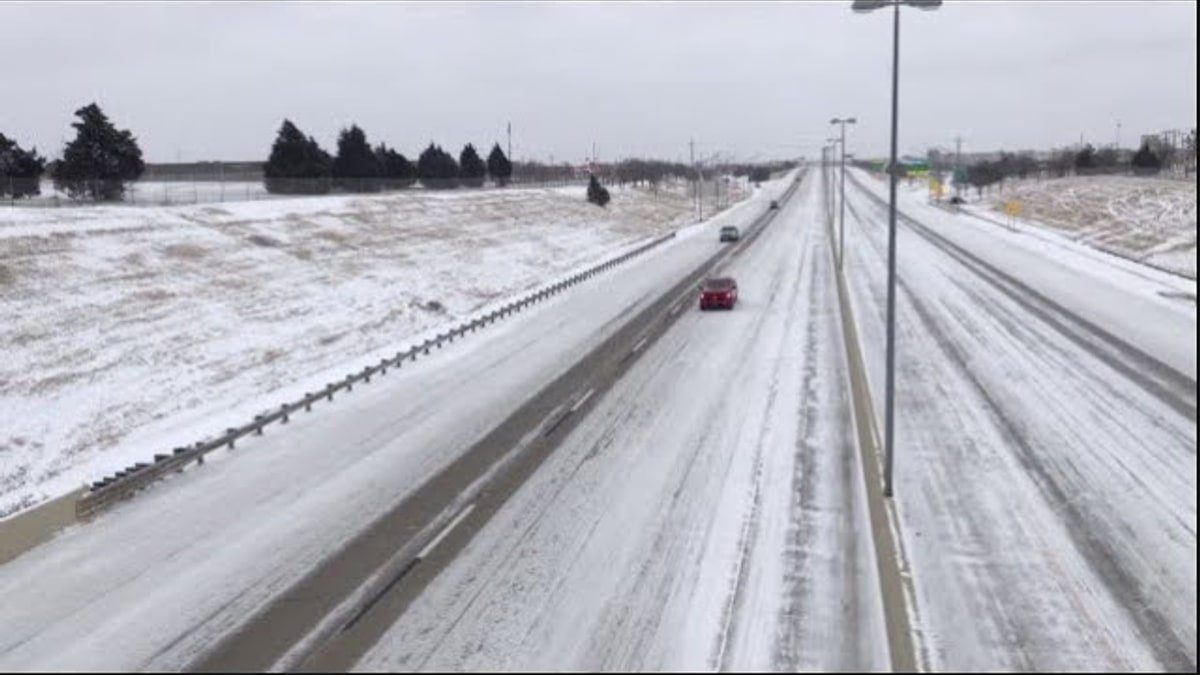
Priority snow routes are treated and plowed first during winter events. These routes support 4 key groups. These are emergency vehicles, school buses, public transit, and commercial vehicles.
Where Can Residents Find the Oklahoma City Snow Route Map?
2 official snow route maps are available online. These are the OKC city-specific interactive map and the ACOG regional map.
- OKC interactive snow route map: okc.gov/winter
- ACOG regional snow route map: acogok.org/okcsnowroutemap
The ACOG map is available to download in high resolution, including individual city-level versions. Residents with questions about specific routes in their area should contact their local public works office.
Where Can Oklahoma City Residents Dispose of Hazardous Waste?
The Oklahoma City Household Hazardous Waste Collection Center is located at 1621 S. Portland Ave, Oklahoma City, OK 73108. The service is free for all Oklahoma City residents. The center is overseen by the Storm Water Quality Division of the Public Works Department.
| Day | Hours |
|---|---|
| Tuesday through Friday | 9:30 AM to 6:00 PM |
| Saturday | 8:30 AM to 11:30 AM |
| Sunday and Monday | Closed |
Phone: (405) 682-7038.
What Items Does the OKC Hazardous Waste Center Accept?
The center accepts 6 categories of household hazardous waste. These are auto products, batteries, e-cigarettes and vape devices, lawn and garden products, household products, and paint and hobby products.
Accepted items by category:
- Auto products: antifreeze, brake fluid, gasoline, motor oil, car cleaners
- Batteries: alkaline, automotive, rechargeable, lithium
- Lawn and garden: fertilizers, pesticides, weed killers, rodent poisons
- Household products: cleaners, aerosols, fluorescent lightbulbs, mercury thermometers, pool chemicals
- Paint and hobby: latex and oil-based paints, caulks, glues, varnishes, propane tanks
Items not accepted at the OKC facility include ammunition, explosives, radioactive waste, biomedical waste, commercial hazardous waste, high-pressure cylinders, tires, medications, and computer equipment.

How Do Oklahoma City Residents Renew Their Vehicle Tags?
Oklahoma City vehicle tag renewals are processed through Service Oklahoma's OkCARS system at okcars.tax.ok.gov. Renewals are available online, by mail, or in person at any licensed tag agent location. Online renewal takes approximately 10 minutes.
Residents are eligible to renew starting the month before the registration expiration month. Oklahoma does not add local or county fees on top of state registration fees, unlike states such as Texas and California.
What Is Needed to Renew a Tag Online in Oklahoma?
Residents need 5 items to renew a tag online. These are the last 4 digits of the vehicle's VIN, the license plate or tag number, an Oklahoma driver's license number, proof of current insurance, and a payment method.
Late renewals carry a $1 per day penalty beginning on the 31st day after expiration, up to a maximum of $100 per year. A 30-day grace period applies to renewal and out-of-state transfers in the same name before penalties begin.
Oklahoma introduced a new Iconic Oklahoma Plate design in September 2024. Residents who want the new plate pay $4 with their annual renewal, or $9 at any point outside of the renewal cycle.
How Do You Apply for a Building Permit in Oklahoma City?
Building permits in Oklahoma City are issued by the Development Services Department at 420 W. Main St., Oklahoma City, OK 73102. Applications are submitted online through the OKC Citizen Access portal powered by Accela. Oklahoma City processes approximately 17,000 permits per year.
What Projects Require a Building Permit in Oklahoma City?
Oklahoma City requires permits for 5 categories of work. These are new construction, structural renovations or additions, demolition, mechanical and electrical system installations, and all full roof replacements.
As of January 2025, all full roof replacements require a permit. Roof overlays (placing new shingles over existing ones) are no longer allowed in Oklahoma City. Inspections verify proper decking, underlayment, and ventilation.
Storm shelters and safe rooms require permits at $0.16 per square foot, with a minimum fee of $75. Oklahoma's building code requires a design wind speed of 250 mph for storm shelters, reflecting the state's tornado risk.
Work that does not require a permit includes interior painting and minor drywall patching.
How Long Does Building Permit Review Take in Oklahoma City?
Residential plan review takes 3 to 5 business days when all required information is submitted. Commercial plan review takes up to 14 business days. Incomplete applications extend review times.
| Application Type | Review Time |
|---|---|
| Residential | 3 to 5 business days |
| Commercial | Up to 14 business days |
Apply online and track permit status at okc.gov/Services/Permits/Building-Trade-Permits.

Donald Reeves writes about Everglades City the way the place deserves to be written about: without the brochure language, without the manufactured wonder, and without pretending that a town of 400 people sitting at the edge of a swamp is something it is not.
He has spent considerable time in Collier County’s oldest settlement, arriving during stone crab season when the waterfront smells of brine and work, and returning in the off-season when the tourists are gone and the town goes quiet in the particular way that only genuinely remote places can. He has paddled the mangrove tunnels of the Ten Thousand Islands, eaten at places with no hours posted on the door, and spoken at length with fishing guides who navigate these waters by memory rather than chart.
His writing on Everglades City FL covers everything from tidal fishing conditions and kayak trails to lodging, local history, and the complex past that most Florida travel content carefully avoids.
He writes to give readers the honest version.