
# Oklahoma City Bombing: History, Death Toll, and How to Visit the National Memorial
For related reading, see Oklahoma City Public Schools Calendar, Lunch Menu, and University Costs: 2025-26 Guide.
The Oklahoma City bombing occurred on April 19, 1995, at 9:02 AM, when a truck bomb exploded outside the Alfred P. Murrah Federal Building in downtown Oklahoma City, Oklahoma. The bombing killed 168 people and is the deadliest act of homegrown terrorism in U.S. history. The site is now home to the Oklahoma City National Memorial and Museum, which receives visitors daily from across the world.
What Was the Oklahoma City Bombing?
The Oklahoma City bombing was a terrorist attack in which a massive homemade bomb composed of more than 2 tonnes of ammonium nitrate fertilizer and fuel oil, concealed in a rental truck, exploded and heavily damaged the Alfred P. Murrah Federal Building.
The blast collapsed the north face of the nine-story building, instantly killing more than 100 people and trapping dozens more in the rubble. It remained the deadliest terrorist attack on U.S. soil until September 11, 2001.
When Did the Oklahoma City Bombing Happen?
At 9:02 AM on April 19, 1995, a 4,800-pound ammonium nitrate and fuel oil bomb exploded in a Ryder truck parked at the north entrance of the Alfred P. Murrah Federal Building in downtown Oklahoma City.
The date was chosen deliberately. April 19, 1995, was the two-year anniversary of the disastrous end to the Waco standoff in Texas.
Who Was Responsible for the Oklahoma City Bombing?
On the morning of April 19, 1995, an ex-Army soldier and security guard named Timothy McVeigh parked a rented Ryder truck in front of the Alfred P. Murrah Federal Building in downtown Oklahoma City. Inside the vehicle was a powerful bomb made from agricultural fertilizer, diesel fuel, and other chemicals. McVeigh got out, locked the door, and headed toward his getaway car. He ignited one timed fuse, then another. At precisely 9:02 AM, the bomb exploded.
McVeigh's co-conspirators were Terry Nichols, who helped plan and build the bomb, and Michael Fortier, who had met McVeigh in the Army.
What Was McVeigh's Motive?
The August 1992 shoot-out between federal agents and survivalist Randy Weaver at his cabin in Idaho, in which Weaver's wife and son were killed, followed by the April 19, 1993, inferno near Waco, Texas, that killed some 80 Branch Davidians, deeply radicalized McVeigh, Nichols, and their associates.
In early 1995, Nichols and McVeigh planned an attack on the federal building in Oklahoma City, which housed, among other federal agencies, the Bureau of Alcohol, Tobacco and Firearms (ATF), the agency that had launched the initial raid on the Branch Davidian compound in 1993.
The building also housed offices of the Social Security Administration, Housing and Urban Development, Veterans Affairs, the Secret Service, and the Drug Enforcement Agency.
What Was the Oklahoma City Bombing Death Toll?
The Ryder truck packed with nearly 5,000 pounds of explosives killed 168 people, among them 19 children, most of whom were in the building's daycare center. The youngest victim was 4 months old. Hundreds of all ages were injured.
A total of 168 people were killed and more than 500 were injured.
The impact extended far beyond casualties. The governor's office reported that 30 children were orphaned, 219 children lost at least one parent, 462 people were left homeless, and 7,000 people lost their workplace.
| Category | Number |
|---|---|
| Total killed | 168 |
| Children killed | 19 |
| Youngest victim | 4 months old |
| Injured | 500+ |
| Children orphaned | 30 |
| Children who lost a parent | 219 |
| People left homeless | 462 |
| People who lost their workplace | 7,000 |
How Much Destruction Did the Oklahoma City Bombing Cause?
Within moments, the surrounding area looked like a war zone. A third of the building had been reduced to rubble, with many floors flattened like pancakes. Dozens of cars were incinerated and more than 300 nearby buildings were damaged or destroyed.
Property damage extended to more than 300 buildings in a 48-square-block area.
What Did the Scene Look Like After the Oklahoma City Bombing?
Images and video footage from the bombing scene document the scale of destruction in the immediate aftermath. The north face of the Murrah Building was entirely exposed, with floors collapsed on top of each other. Emergency responders from across the country arrived within hours.
Emergency crews raced to Oklahoma from across the country, and when the rescue effort finally ended two weeks later, the death toll stood at 168 people.
The most widely circulated photograph from the bombing shows firefighter Chris Fields carrying one-year-old Baylee Almon, who had been pulled from the rubble. The image, taken by Charles Porter IV, won the 1996 Pulitzer Prize for Spot News Photography. Baylee Almon died from her injuries. The photograph became one of the defining images of the attack.
Official archival images and footage from the bombing are available through the Oklahoma City National Memorial and Museum and the FBI's public records archive.
How Were the Oklahoma City Bombing Perpetrators Caught?
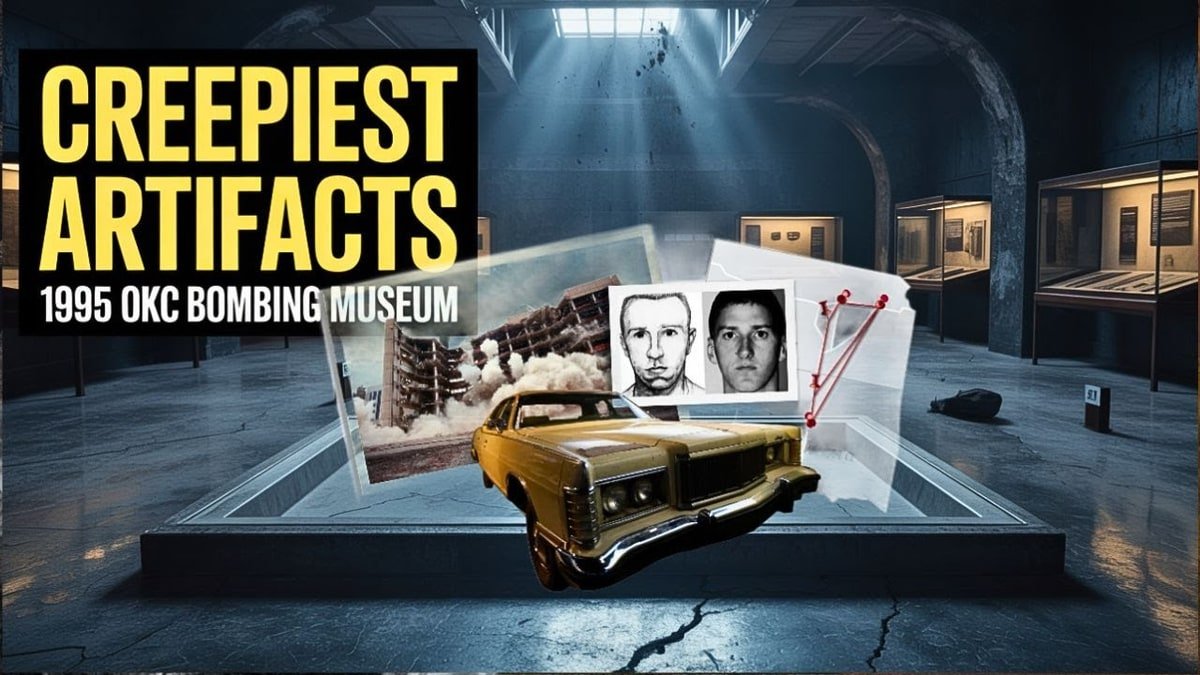
A day after the bombing, the FBI released a sketch of a suspect who had rented a Ryder truck in Kansas. That suspect was Timothy McVeigh.
McVeigh was already in custody. He had been stopped by Oklahoma State Trooper Charlie Hanger approximately 90 minutes after the explosion, on Interstate 35 near Perry, Oklahoma, for driving a vehicle with no license plates. Hanger discovered McVeigh was carrying a concealed weapon and arrested him. Two days later, while McVeigh remained in a county jail, the FBI matched his identity to the sketch.
The FBI searched more than 682,000 airline reservation records and conducted what became one of the largest investigations in the agency's history, code-named OKBOMB.
What Happened to Timothy McVeigh?
On June 2, 1997, McVeigh was convicted on all 11 counts against him, and on August 14, the death penalty was formally imposed. McVeigh was executed by lethal injection on June 11, 2001.
What Happened to Terry Nichols and Michael Fortier?
Terry Nichols was convicted of conspiracy and involuntary manslaughter in federal court in 1997 and sentenced to life in prison. He was later tried in Oklahoma state court and convicted on 161 counts of first-degree murder in 2004, receiving 161 consecutive life sentences.
Michael Fortier, who had met McVeigh in the Army, was sentenced to 12 years in prison for failing to warn authorities about the Oklahoma City bombing plan.
What Is the Oklahoma City National Memorial?
The Oklahoma City National Memorial and Museum is located on the former site of the Alfred P. Murrah Federal Building in downtown Oklahoma City. It is a living memorial and experiential museum that honors the victims, survivors, and rescuers of the Oklahoma City bombing of April 19, 1995.
On April 29, 2000, the fifth anniversary of the bombing, President Bill Clinton officially dedicated the Outdoor Symbolic Memorial. The museum opened in 2001.
The Outdoor Symbolic Memorial was designed by the Butzer Design Partnership. Their entry was selected from a pool of 624 entries in an international design competition.
What Are the Elements of the Outdoor Symbolic Memorial?
The Outdoor Symbolic Memorial comprises the bronze-clad Gates of Time, Reflecting Pool, the Field of Empty Chairs with 168 chairs honoring those killed, the Survivor Tree, Rescuers' Orchard, and a special area for children.
Gates of Time. These monumental gates mark the moments before and after the bombing. The east gate shows 9:01, symbolizing the last moments of peace, while the west gate shows 9:03, representing the moment healing began.
Reflecting Pool. The pool occupies what was once NW Fifth Street. A shallow depth of gently flowing water provides a peaceful setting for quiet reflection.
Field of Empty Chairs. The 168 chairs represent the lives taken on April 19, 1995. They stand in 9 rows to represent each floor of the building, and each chair bears the name of someone killed on that floor. 19 smaller chairs stand for the children.
Survivor Wall. On the east end of the Memorial stand the only remaining walls from the Murrah Building. Today, more than 600 names of survivors are inscribed on salvaged pieces of granite from the Murrah Building lobby.
Children's Area. The children's area is filled with hand-painted tiles sent by children from across the country in the days and weeks following the bombing.
What Is the Survivor Tree?
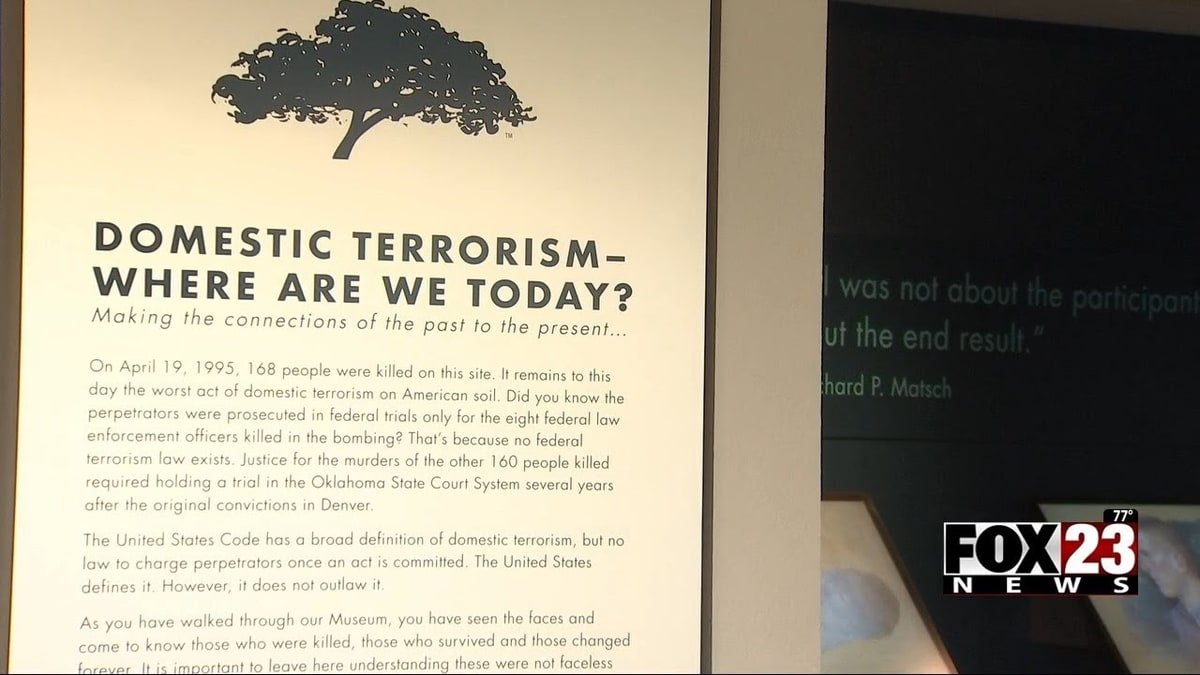
The Survivor Tree, an American elm, bore witness to the violence of April 19, 1995, and withstood the full force of the attack. Years later, it continues to stand as a living symbol of resilience.
A 100-year-old American elm, the Survivor Tree is the only tree in the surrounding area that survived the bombing. Planted around the Survivor Tree are Oklahoma redbud trees, which represent the first responders from Oklahoma, and a Chinese pistache and Amur maple, which represent the rescuers who came from across the country and around the world.
Hundreds of seeds from the Survivor Tree are planted annually and the resulting saplings are distributed each year on the anniversary of the bombing. Thousands of Survivor Trees are growing in public and private places all over the United States. The city sent saplings to Columbine High School after the massacre, to New York City after the September 11, 2001 attacks, and to Virginia Tech following its 2007 shooting.
What Does the Museum Contain?
The museum offers visitors a chronological, self-guided, and interactive tour separated into 10 chapters, starting with the history of the site all the way through the bombing's lasting impact and what it means for the country's future.
In the Museum, a powerful story unfolds through exhibits, theaters, and interactives. Visitors meet courageous first responders, hear survivor stories, and pay tribute to those who were killed.
The average visit lasts an hour and a half. The museum is fully wheelchair accessible, with elevators on each level and complimentary wheelchairs available at the Admissions Desk.
How Do You Get Oklahoma City National Memorial Tickets?
Tickets for the Oklahoma City National Memorial Museum are available online at memorialmuseum.com/museum/get-tickets/. Timed admission is sold in advance. The Outdoor Symbolic Memorial requires no ticket and is accessible at no cost.
What Are the Oklahoma City National Memorial Ticket Prices?
Admission to the outdoor memorial is free. Entrance to the museum costs $18 for adults and $15 for students between the ages of 6 and 17. Children 5 and younger are admitted free. Parking is free.
Active duty military receive free admission with a valid ID.
Group rates apply for parties of 15 or more. Group admission rates are: Adults $16; Seniors (62 and older) $14; Military (with ID) $14; Students $7. Bus drivers and group tour operators receive free admission.
| Visitor Type | Admission Price |
|---|---|
| Adults | $18 |
| Students (ages 6 to 17) | $15 |
| Children 5 and under | Free |
| Active duty military | Free |
| Group adults (15+ party) | $16 |
| Group seniors (62+) | $14 |
| Group students | $7 |
What Are the Oklahoma City National Memorial Hours?
The Oklahoma City National Memorial Museum is open 7 days a week. During summer (Memorial Day weekend through Labor Day weekend), hours are Monday through Saturday 9:00 AM to 6:00 PM and Sunday 12:00 PM to 6:00 PM. The rest of the year, hours are Monday through Saturday 9:00 AM to 5:00 PM and Sunday 12:00 PM to 5:00 PM. Ticket sales end one hour before closing each day.
The Museum is closed on Easter, Thanksgiving Day, Christmas Eve, Christmas Day, and New Year's Day. The Outdoor Symbolic Memorial is free and open 24 hours a day, 365 days a year.
National Park Service Rangers are on-site daily from 8:30 AM to 5:00 PM, except Thanksgiving, Christmas, and New Year's Day.
The memorial is located at 620 N Harvey Avenue, Oklahoma City, OK 73102. Tickets are available directly at memorialmuseum.com/museum/get-tickets/.
Word count: ~1,800 words. Let me know if you want the meta description, title tag, or a CSV update with this article added.
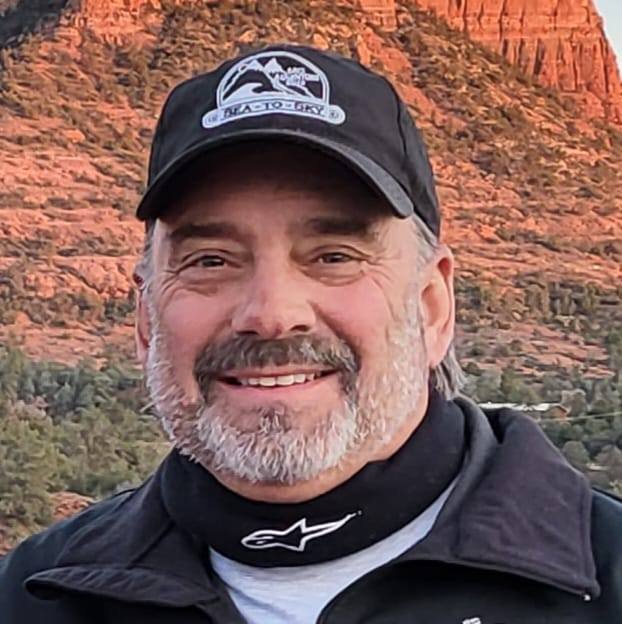
Donald Reeves writes about Everglades City the way the place deserves to be written about: without the brochure language, without the manufactured wonder, and without pretending that a town of 400 people sitting at the edge of a swamp is something it is not.
He has spent considerable time in Collier County’s oldest settlement, arriving during stone crab season when the waterfront smells of brine and work, and returning in the off-season when the tourists are gone and the town goes quiet in the particular way that only genuinely remote places can. He has paddled the mangrove tunnels of the Ten Thousand Islands, eaten at places with no hours posted on the door, and spoken at length with fishing guides who navigate these waters by memory rather than chart.
His writing on Everglades City FL covers everything from tidal fishing conditions and kayak trails to lodging, local history, and the complex past that most Florida travel content carefully avoids.
He writes to give readers the honest version.