
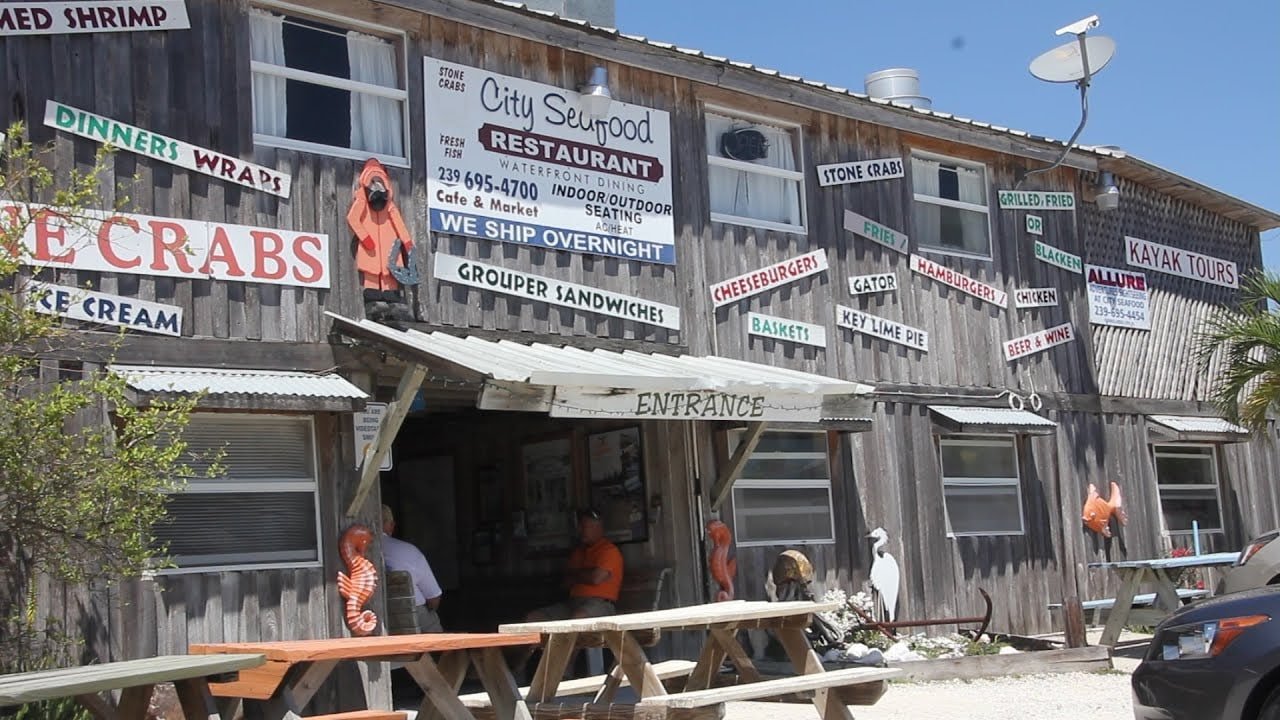
The story came up the way it usually comes up, which is sideways and without invitation. I was sitting on the waterfront eating stone crab at a table that had a direct view of the water and an indirect view of the parking lot, and the man next to me, who had been crabbing these waters for going on thirty years and who had not introduced himself and did not need to, said something about a writer who had come down from New York a few years back and stayed three days and filed a piece that people here were still reading aloud to each other in a tone that was not quite disbelief and not quite anger but something that occupies the territory between the two.
He did not name the publication. He did not need to. The Saveur piece on Everglades City is the kind of journalism that a small town absorbs differently than a large one, because in a large town a damaging article is one data point among thousands and the town’s identity is large enough to contain it without being defined by it. In a town of under five hundred people, a national magazine calling you the crab-fishing drug capital of America is not a characterization you can dilute. It becomes part of the record, the searchable, citable, permalink-permanent record, and it follows the place into every conversation that begins with someone who read it before they arrived.
What Saveur captured was real. The drug convictions were real. The federal operation in the late 1980s that swept up a significant portion of the adult male population of Everglades City on cocaine trafficking charges was one of the largest rural drug busts in Florida history, and the proximity of the town to the Gulf of Mexico and the Ten Thousand Islands, those ten thousand places where a boat could disappear and reappear without much accounting for where it had been, was not incidental to how the trafficking operated. The magazine did not invent the story. The story happened. What the piece did was use it as the dominant key in which everything else about the town was written, the crabbing, the isolation, the tight-mouthed quality of a community that does not offer itself up easily to outsiders, all of it read through the lens of a place that had turned to criminality because the legitimate economy was precarious and the geography made transgression easy.
That framing is not wrong exactly. It is incomplete in the way that most frames are incomplete, which is that it captures what it was designed to capture and leaves out what does not fit the story the writer had already decided to tell before the notebook came out.
What the piece left out was the generation that came after, the sons and daughters of the men who went to prison, who grew up in a town carrying a federal conviction as part of its civic identity and who built lives here anyway, or left and came back, or left and did not come back but still understood this as the place they were from. I spoke with a woman in her early forties who had been twelve years old when the arrests happened and who described the experience of watching her father and her uncles and most of the men on her street be taken away in a sequence of events that she had processed over the intervening decades into something she could discuss with the flat precision of a person who has thought about something long enough to stop being surprised by their own feelings about it. She was not making excuses for what happened. She was not performing forgiveness. She was describing, with considerable patience, what it had been like to grow up in a place where the narrative about your home was set by people who had visited for three days.
That is the part of the Saveur story that the Saveur story could not contain, because the Saveur story was done. It was filed, edited, printed, and distributed before the town had any opportunity to respond to the version of itself it was being handed. This is what journalism does to small places, and the asymmetry of it is not a bug in the system. It is the system.
The waterfront at Triad smells in October like brine and boat diesel and something faintly sweet underneath, which is the stone crab itself, the particular marine sweetness of a crustacean pulled from cold deep water and iced immediately, and the boats come in the afternoon with their catch and the men who run them have the specific unhurriedness of people doing physical work they have been doing for a long time. The town around them is the town it has always been, one road in, no traffic light, the mangroves pressing up against the edges of everything, the Gulf beginning its vast indifference a few miles out through the islands. The drug convictions are thirty-five years in the past. They are also indexed by Google and available to anyone who types the name of this place into a search bar, and the Saveur piece appears early in the results, and this is what reputation means in the age of permanent digital record.
I do not think the piece was dishonest. I think it was incomplete, and I think the incompleteness was not an accident but a consequence of spending three days somewhere and then writing as though three days were enough. They are not enough. They are rarely enough anywhere, and they are specifically not enough in a place that has spent the better part of its existence being misunderstood by people who thought the Gulf light and the stone crab and the interesting history added up to something they could explain.
The town has never quite recovered from the headline, as the piece’s own retrospective admirers like to note. What that sentence always omits is that the town was here before the headline and it is here after it, and the people living in it did not require recovery from a story. They required the story to eventually stop being the first thing anyone knew about them. It has not stopped yet. But the crab season keeps coming, and the boats keep going out.

Donald Reeves writes about Everglades City the way the place deserves to be written about: without the brochure language, without the manufactured wonder, and without pretending that a town of 400 people sitting at the edge of a swamp is something it is not.
He has spent considerable time in Collier County’s oldest settlement, arriving during stone crab season when the waterfront smells of brine and work, and returning in the off-season when the tourists are gone and the town goes quiet in the particular way that only genuinely remote places can. He has paddled the mangrove tunnels of the Ten Thousand Islands, eaten at places with no hours posted on the door, and spoken at length with fishing guides who navigate these waters by memory rather than chart.
His writing on Everglades City FL covers everything from tidal fishing conditions and kayak trails to lodging, local history, and the complex past that most Florida travel content carefully avoids.
He writes to give readers the honest version.