
The smell hits you before the town does. Low tide over mangrove mud, brine and something organic underneath it, the particular scent of a place that has not decided to hide what it is. I was coming in on 29 South just after six in the morning, the Tamiami Trail still dark behind me and the sky ahead doing something complicated in pinks and greys, and I pulled over before the bridge because a great blue heron was standing on the guardrail with the absolute stillness of something that has never once been in a hurry. It stood there. I sat there. After a while it left. That is more or less how Everglades City works.
The town sits at the end of the road in a way that is literal rather than poetic. State Road 29 comes south off the Tamiami Trail, passes through Copeland, crosses a stretch of sawgrass and water, and deposits you into a place with fewer than five hundred permanent residents, one traffic circle, and no meaningful reason to pass through on your way to somewhere else. You are either there because you meant to be, or you took a wrong turn, and the wrong-turn people are usually back on the highway within twenty minutes, slightly unnerved by the quiet.
I have been coming here long enough to know the difference between the town during stone crab season and the town in September, and they are different places. In October, when the season opens, the waterfront at Triad Seafood has a purposeful energy that has nothing to do with tourism. The men running the boats know exactly where they are going. The claws come in and get processed and some portion of what gets harvested here ends up on a plate in a restaurant two hundred miles away where nobody mentions Everglades City on the menu. In September, the docks are quiet and the heat is serious and the town belongs entirely to the people who live in it, and that version is the more honest one, and also the one that travel content almost never shows.
I had a conversation once with a woman who had moved here after Irma. She had come to help with the cleanup, she said, and then she looked at what the town did in the aftermath, which was put itself back together largely without waiting for outside agencies to tell it how, and she decided that this was the kind of place she wanted to live. She said it mattered to her that people here knew how to do things. Practical things. She had lived in cities where that knowledge had mostly evaporated, she said, and she had not realised how much she missed it until she came somewhere it had not.
That conversation unsettled me in a way I kept returning to. I had been thinking about Everglades City in terms of what it offered visitors. Water access, wildlife, the Ten Thousand Islands, the kind of fishing that guides who know these channels by memory and instinct rather than GPS can take you to. That framing is not wrong. But the woman from after Irma was talking about something else, which was the texture of a community that has survived repeated catastrophe without becoming a ruin narrative, and that is rarer than the travel content suggests.
The mangroves are the fact of this place more than anything else. Paddle far enough into a mangrove tunnel and the canopy closes above you and the light comes through green and strange and your phone has stopped pretending to know where you are. The roots arch into the water in every direction and the channel narrows and somewhere nearby something moves and you cannot see what it was. I have been in those tunnels a dozen times and I still find the transition unsettling, the moment when the open water is behind you and the world reduces to what is immediately in front of the bow. It asks something of you. A willingness to not know exactly where you are, or exactly what is in the water with you. Most places that call themselves wild have been organised in ways that remove that requirement. This one has not.
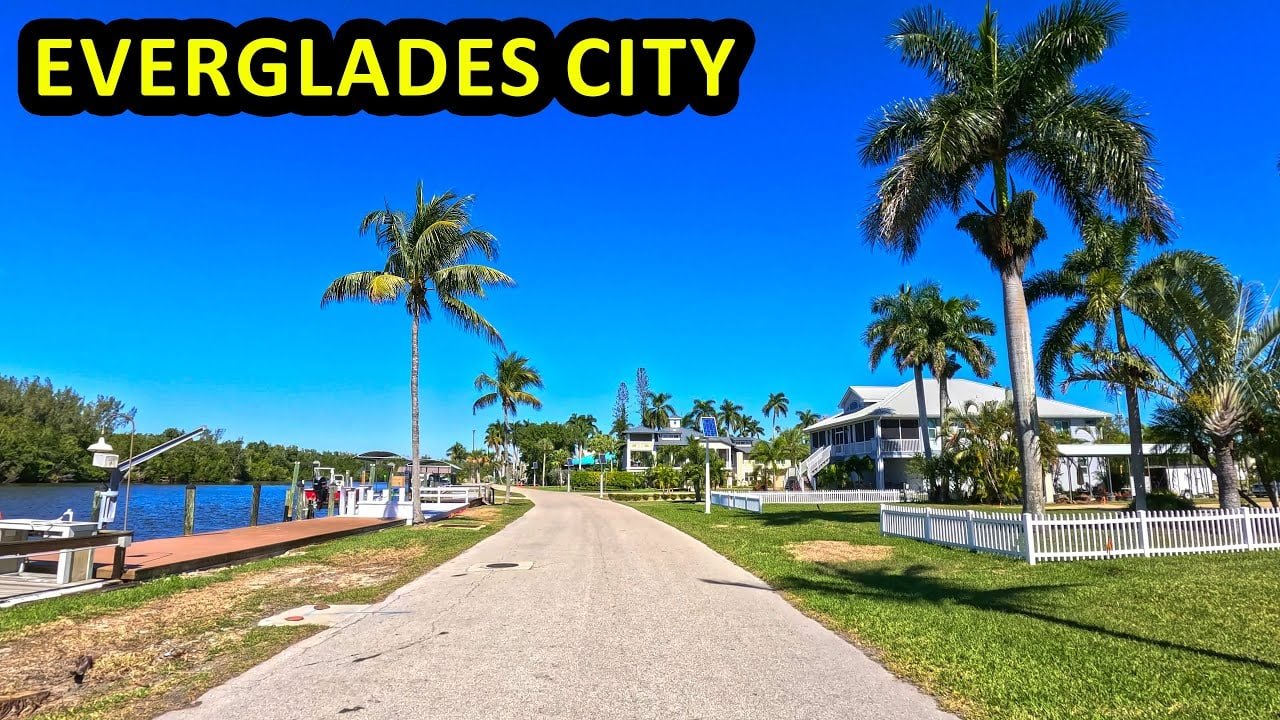
The travel content that exists about Everglades City tends toward the predictable. Aerial photographs of Ten Thousand Islands that make it look like a screensaver. Stone crab claws arranged on crushed ice. A kayaker in bright gear disappearing into the mangroves. None of it is false. All of it is insufficient. What it misses is the specific weight of the place, which has to do with its smallness and its isolation and the fact that it has survived things that should have ended it, and that survival has not made it either precious or defeated. It is just still here. Still doing what it does.
There is something that happens to small towns when travel content finds them. The things that made them specific get packaged into things that can be photographed and scheduled and reviewed on platforms, and the packaging slowly replaces what was packaged. Everglades City is not immune to this. The Seafood Festival brings a version of the town into existence for a weekend that the town then has to return from. But the road south on 29 is still narrow and the signal still drops and the heron is still on the guardrail at six in the morning, and the people here still know how to do things, and September still comes and takes the tourists back to wherever they came from.
What I have come to believe about this place is that its greatest protection is its own indifference to being found. It does not perform accessibility. It does not make the arrival easy or the experience legible in the way that draws the kind of attention that damages places. People drive past it on the Tamiami Trail every day without stopping, and the town does not particularly notice, and that is not a mistake on the part of the drivers.
It is just the arrangement that has, so far, kept the place intact.

Donald Reeves writes about Everglades City the way the place deserves to be written about: without the brochure language, without the manufactured wonder, and without pretending that a town of 400 people sitting at the edge of a swamp is something it is not.
He has spent considerable time in Collier County’s oldest settlement, arriving during stone crab season when the waterfront smells of brine and work, and returning in the off-season when the tourists are gone and the town goes quiet in the particular way that only genuinely remote places can. He has paddled the mangrove tunnels of the Ten Thousand Islands, eaten at places with no hours posted on the door, and spoken at length with fishing guides who navigate these waters by memory rather than chart.
His writing on Everglades City FL covers everything from tidal fishing conditions and kayak trails to lodging, local history, and the complex past that most Florida travel content carefully avoids.
He writes to give readers the honest version.