
The house on the south end had been empty since Irma. I had watched it from the road for years, the way you watch a wound that isn’t healing: noting the progression of deterioration without expecting resolution. Then one October morning there was a truck in the driveway and a man somewhere in his middle sixties standing on the porch with a measuring tape, looking at the ceiling with the expression of someone doing arithmetic.
I stopped, which is something you can do in Everglades City because there is almost never anyone behind you.
We talked for twenty minutes. He had come down from Ohio six months earlier, driving through Naples and then down the Tamiami Trail and then turning south at the junction and finding himself in a place that, as he described it, felt like somewhere that had not yet been told it was supposed to look different. He had bought the house for what it would cost to rent a two-bedroom apartment in Columbus for three years. He was going to fix it himself, mostly. He had time.
I asked him if he knew about the flood history of that particular lot.
He did. He had done his research, or some of it. He knew about Irma, knew the water had come in, knew the floor had been replaced after and then left when the previous owner gave up and moved north to his daughter’s house in Ocala. He did not entirely know what it felt like to ride out a storm in a building three feet above sea level in a town that sits at the edge of an estuary, but he was not unaware that this was part of what he was choosing.
That conversation was the one that shifted how I had been thinking about the new arrivals, and I had been thinking about them uncharitably, if I’m honest with myself. The people I’d been seeing over the past few years, the ones with the cars from states that don’t require front license plates and the habit of asking at restaurants whether there was a gluten-free option, had put me in a frame of mind that I recognized as unfair even while I was in it. The town has always been mixed, in the way that small towns on the edges of things are mixed: people who were born here, people who drifted in, people who arrived after a disaster and found something in the aftermath that answered a question they hadn’t known they were asking.
What Everglades City has that Naples and Marco Island and every other destination within a reasonable drive of the Ten Thousand Islands does not have is the quality of genuine quiet. Not the performed quiet of a spa or a carefully landscaped neighbourhood whose silence is a consequence of design. The actual quiet of a town with no traffic lights, one road in, and a population small enough that the ambient noise of human activity simply does not accumulate to the level you carry unconsciously from places where there are more people than the landscape requires.
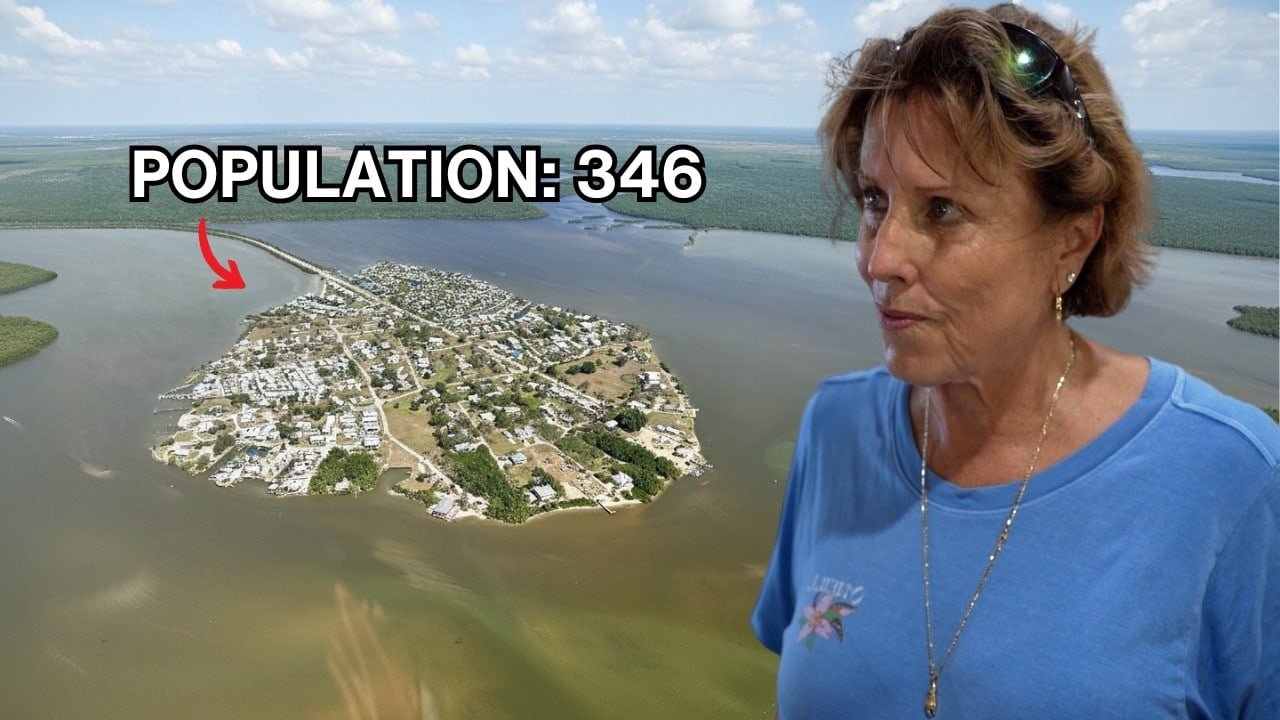
At seven in the morning the low tide comes off the mangrove mud with a smell that is either appealing or not depending on the person, and the mullet jump in the canal near the boat ramp for reasons that biologists can explain and that remain visually surprising regardless of how many times you witness it, and the light does something specific to the water in October before the cold front moves through and breaks the humidity that I have not seen replicated anywhere in the state. There is nothing, audibly, competing with any of this.
Retirees from Ohio and Michigan and Pennsylvania are finding this because the cost of what Naples offers has become prohibitive and the lifestyle Naples offers is not what everyone wants. The people who end up in Everglades City rather than Naples are making a statement with their money, even if they would not describe it that way. They are choosing the real thing at the price of difficulty over the managed version at the price of comfort. Some of them will find out they were wrong about which they preferred. Some of them will not.
The question I find myself sitting with is whether the discovery changes the thing being discovered, and at what pace, and whether the town’s particular resistance to optimization, its geographic inconvenience, its susceptibility to flood, its habit of being what it is without adjustment for whoever is passing through, will survive the attention that is coming. I do not have a confident answer. Small towns that get written about as places to discover tend to become, over time, the version of themselves that was written about, and then eventually they become something else again, and the people who loved the in-between version watch the transition from a distance.
The man from Ohio knew about the water that came in. He was standing on the porch with a measuring tape and the expression of someone in the early stages of understanding what a decision entails.
That is probably the most accurate description of what coming to Everglades City requires, whether you are coming for a weekend or for the rest of your life. You make a decision based on what you know. Then the place shows you what you didn’t know, and you find out what kind of person you are.

Donald Reeves writes about Everglades City the way the place deserves to be written about: without the brochure language, without the manufactured wonder, and without pretending that a town of 400 people sitting at the edge of a swamp is something it is not.
He has spent considerable time in Collier County’s oldest settlement, arriving during stone crab season when the waterfront smells of brine and work, and returning in the off-season when the tourists are gone and the town goes quiet in the particular way that only genuinely remote places can. He has paddled the mangrove tunnels of the Ten Thousand Islands, eaten at places with no hours posted on the door, and spoken at length with fishing guides who navigate these waters by memory rather than chart.
His writing on Everglades City FL covers everything from tidal fishing conditions and kayak trails to lodging, local history, and the complex past that most Florida travel content carefully avoids.
He writes to give readers the honest version.