
The traps were stacked three-high along the dock at Triad before the light was fully established on the water. A man I had spoken to two seasons earlier was working through them with an unhurried efficiency. I asked how it had gone. He said good, which in this town is not an understatement.
Good, in the context of Southwest Florida’s stone crab fishery, is a word that covers a lot of distance. The 2025-2026 season ran from October 15 through May 1, and by most accounts it was the best the region had seen since Hurricane Ian dismantled the 2022 harvest. Some crabbers along the corridor from Sanibel down through Everglades City were landing three to four times the hauls of recent years. Individual crabs were running over two pounds, up from the three-quarter-pound averages that had become the new normal post-storm.
Stone crab is a fishery that operates on a logic most people have never heard explained properly. You harvest one claw, return the crab alive to the water, and the claw regenerates over the following season. This means a good season this year is a direct investment in next year’s harvest, and a bad one has consequences that compound. The recovery since Ian has been slow precisely because it was working on that biological timeline, not a human one.
What the headline numbers do not capture is what a good season actually feels like in Everglades City when you are standing in it. The waterfront smells different in season, brine and boat fuel mixing with something mechanical that starts around 5am and does not stop until dark. The conversations at the dock are practical and specific rather than cautious and hedged. There is a kind of operational confidence in the way people move that you do not see in a marginal season.
What surprised me, talking to the crabbers who worked this season, was the restraint in how they described it. Nobody I spoke to used the word exceptional, or called it a comeback. One man who has been working traps in the Ten Thousand Islands for more than twenty years said it was a return to what it used to be. He did not say it with celebration. He said it the way you describe something that should have been normal all along.
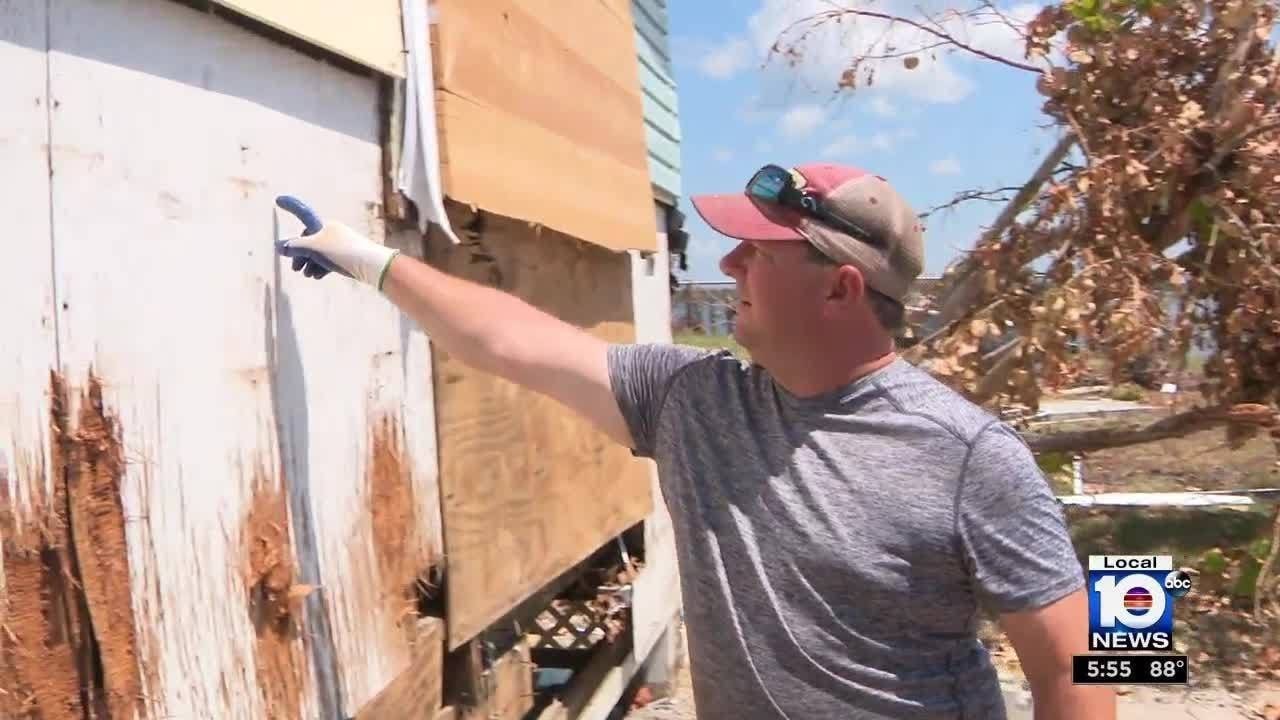
Hurricane Ian hit the Southwest Florida coast in September 2022, and its effects on the stone crab harvest were immediate and lasting. Trap losses were severe, the substrate the crabs work in was disturbed, and the season that followed was the kind that ends careers and tests resolve. Everglades City had already rebuilt from Irma in 2017, and Ian asked it to absorb another disruption before the recovery from the first was complete. This season’s result is not a story about resilience but about persistence over a longer timeline than anyone who writes about this town ever stays around to document.
The stone crab fishery is not a secondary industry in Everglades City. It is the town’s economic architecture. Trapping, processing, ice, fuel, supply, equipment repair, hospitality, and every informal economy that flows from working people with working money all depend on a productive season. A bad season does not just mean lower income for the crabbers. It means the diner is quieter in November, the hardware store is slower, and something tightens across the whole town that takes a season to release.
The travel coverage of this season will focus on the claws. The photography will be beautiful and the pieces will tell you where to order and what to pair it with. What that coverage will not tell you is that the quality has nothing to do with the restaurant. It has to do with a sustainable harvest model that requires the people working it to care about next season as much as this one.
I sat at the dock for about an hour that morning, watching the traps come up and go down. The man I had spoken to did not ask me what I was writing or where it would run. He had more traps to sort and a good season to account for and the next one already starting. The health of this town has always been legible in exactly this way: not in what people say about it, but in how they move through the work.

Donald Reeves writes about Everglades City the way the place deserves to be written about: without the brochure language, without the manufactured wonder, and without pretending that a town of 400 people sitting at the edge of a swamp is something it is not.
He has spent considerable time in Collier County’s oldest settlement, arriving during stone crab season when the waterfront smells of brine and work, and returning in the off-season when the tourists are gone and the town goes quiet in the particular way that only genuinely remote places can. He has paddled the mangrove tunnels of the Ten Thousand Islands, eaten at places with no hours posted on the door, and spoken at length with fishing guides who navigate these waters by memory rather than chart.
His writing on Everglades City FL covers everything from tidal fishing conditions and kayak trails to lodging, local history, and the complex past that most Florida travel content carefully avoids.
He writes to give readers the honest version.