
A fishing guide told me about it the way you’d tell someone about a road that got rerouted: as a fact of local geography that changed the way things worked, not as a scandal requiring apology or a story requiring embellishment. We were out on the water near Chokoloskee, the morning light still low and the mangrove smell coming off the banks in that particular way it does before the heat builds, and he was explaining why certain families were no longer in town, and somewhere in the middle of that explanation came a mention of 1983 and the arrests, delivered in the same tone he used to describe tidal patterns.
That tone was the thing that stayed with me.
The history is documented and not secret. In the late 1970s and into the early 1980s, Everglades City became one of the more significant marijuana smuggling hubs in the United States. The Ten Thousand Islands, that maze of mangrove and shallow channel and hidden anchorage that spreads out into the Gulf west and south of town, provided the infrastructure. The fishing families who had been working those waters for generations provided the knowledge. The boats were already there. The skills were already there. The local networks were already there. What arrived was a market, and the market was large.
It is worth understanding what the community looked like before that market arrived. Remote, economically marginal, dependent on commercial fishing in a period when commercial fishing in South Florida was becoming increasingly difficult for reasons that had nothing to do with the fishermen themselves: overfishing pressure, environmental degradation, the conversion of waterfront land to tourism and residential development up and down the coast, the gradual erosion of the working waterfront economy that had sustained places like this for a century. The fishing families of Everglades City were not looking for adventure. They were looking for income, in a place where income had become unreliable, using the only skills and equipment and geographic knowledge they had.
The geography of the Ten Thousand Islands is not metaphorically complex. It is literally so. There are, depending on how you count, somewhere between ten thousand and considerably more islands in the archipelago, most of them mangrove, most of them indistinguishable from one another to anyone who did not grow up navigating them. GPS was not a factor in the late 1970s. Charts were useful to a point. What was useful beyond that point was memory: the specific layered memory of someone who had been moving through these channels since childhood, who knew which passages silted up after a storm and which ones held depth regardless of the season, who could run at speed in the dark through water that would ground any vessel whose captain was working from anything other than the map in his head.
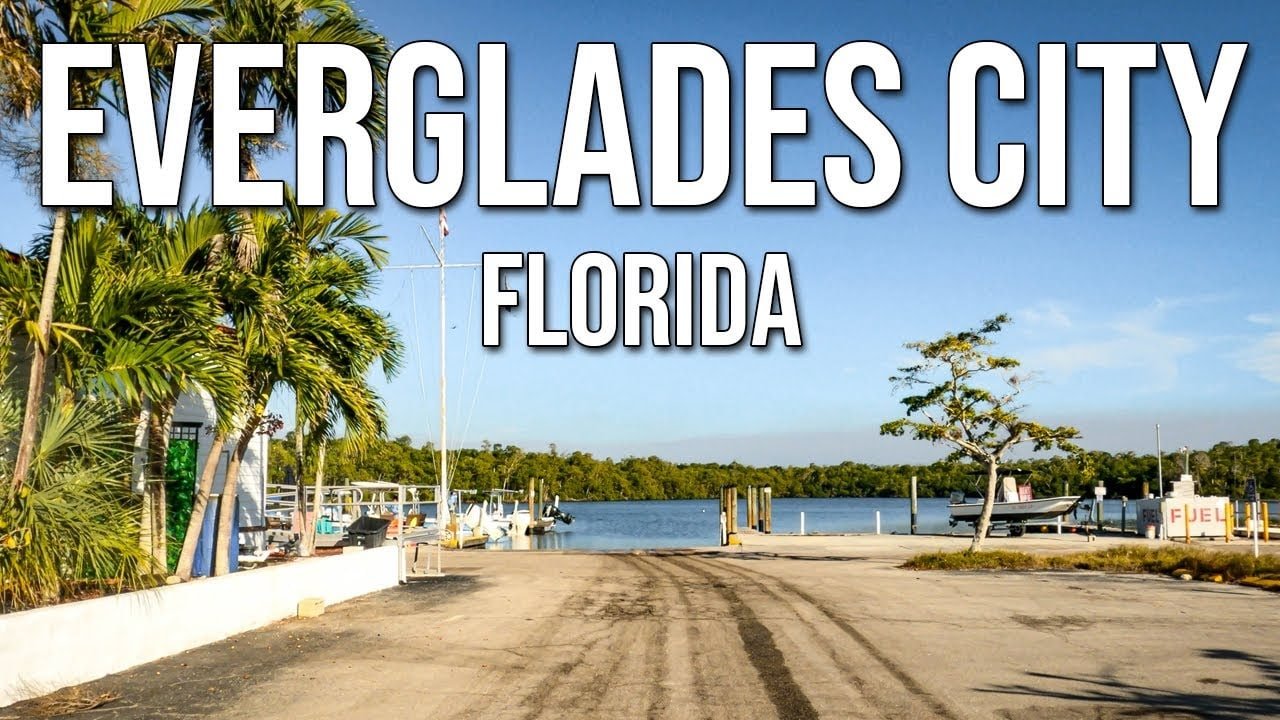
The federal government arrived in 1983. Operation Everglades was a coordinated DEA action that resulted in the arrests of a substantial portion of the town’s adult population, including fishing guides, boat operators, and people whose families had been in the area for generations. The prosecutions that followed sent many of them to prison. The community contracted. Young people left. Businesses that had existed for decades closed. The economic logic that had drawn people into smuggling, the inadequacy of the legal economy, was answered not with any improvement to that economy but with enforcement, and the enforcement was thorough and the consequences were long.
The moment that forced me to revise my understanding of how this history lives in the town came from a conversation I was not quite part of, two men talking at a waterfront table in the way people talk when they are not performing for an audience, and one of them said, about someone whose name I did not catch, that he had gotten out in 1987 and never left. Got out of prison, I understood. Came back to a town that had been substantially reshaped by his absence and by the absence of people like him, and stayed. That level of attachment to a place is not something you can explain easily to someone who has not felt it. You can only note that it exists and think carefully about what it means.
What I think it means is this: the smuggling era in Everglades City is not a colorful footnote to the town’s history, and it cannot be separated from the history without losing the thread of it. It is connected, by the same geography and the same families and the same economic pressures, to the stone crab season and the airboat permits and the way the town rebuilt after Irma with very little outside help and the particular quality of self-sufficiency that you notice here if you pay attention. These are not different stories. They are the same story about a community at the edge of navigable America, making decisions with the options it had, in a landscape that both isolated it and, for a period, made it briefly and dangerously central to the interests of people and agencies from somewhere far away.
The federal government prosecuted the town and then returned its attention elsewhere. The town is still here. That sequence of events says something about both of them.

Donald Reeves writes about Everglades City the way the place deserves to be written about: without the brochure language, without the manufactured wonder, and without pretending that a town of 400 people sitting at the edge of a swamp is something it is not.
He has spent considerable time in Collier County’s oldest settlement, arriving during stone crab season when the waterfront smells of brine and work, and returning in the off-season when the tourists are gone and the town goes quiet in the particular way that only genuinely remote places can. He has paddled the mangrove tunnels of the Ten Thousand Islands, eaten at places with no hours posted on the door, and spoken at length with fishing guides who navigate these waters by memory rather than chart.
His writing on Everglades City FL covers everything from tidal fishing conditions and kayak trails to lodging, local history, and the complex past that most Florida travel content carefully avoids.
He writes to give readers the honest version.