
The first time I went to Wooten’s, I almost didn’t stop. The sign on the Tamiami Trail is large enough to register but not large enough to explain itself, and I was moving with the particular momentum of someone who has a destination and has already decided that everything between here and there is a distraction. I stopped because the car behind me slowed, and then stopped too, and a woman got out with a child on her hip and walked toward the entrance with the ease of someone returning rather than arriving. Something in that movement made me pull over.
That was several years ago. I have been back to Wooten’s since, and to Captain Jack’s, and to the smaller operations along the water that don’t advertise beyond a hand-painted sign or a number passed between people who already know. And the thing I keep returning to is not the airboats or the alligators or the cypress swamp going dark green in the afternoon light, though all of those are real and worth the stop. What I keep returning to is the specific quality of an enterprise that has been running long enough that the family operating it has stopped needing to explain itself to anyone.
Wooten’s has been on that stretch of the Tamiami Trail since the 1950s. The airboat operation, the animal exhibits, the swamp buggy tours through terrain that has not changed meaningfully since the business opened, all of it runs now through people who learned this work from people who learned it from the people who started it. There is a kind of knowledge that accumulates in that transmission and that cannot be replicated by someone who arrived recently with enthusiasm and a business plan. It is knowledge about specific water. About what the sawgrass does in different seasons. About where the animals are at what time of day and why. The guides at Wooten’s are not reciting information. They are reporting it, from direct and continuing observation, and the difference is audible if you are paying attention.
Captain Jack’s operates with the same logic and a smaller footprint, and the intimacy of the scale produces something that the larger operations cannot always match. I had a guide there on an early morning run who spent most of the trip in a silence that felt considered rather than inattentive, pointing occasionally at things I would not have noticed on my own, and when I asked him afterward how long he had been running that route he thought about it and said something like: my whole life, basically, which turned out to be more literally true than I initially understood. His grandfather had worked these waters. His father had. The route was not a route to him in the way a route is to someone reading a map. It was more like a neighbourhood.
What surprised me on that morning, and what revised the way I had been thinking about these family operations, was a conversation that happened at the dock afterward. A woman was waiting for the next run, and she mentioned that she had brought her own children here every year since they were small, and that her mother had brought her, and that her grandmother had been brought by someone whose name she no longer remembered but whose description of the place had apparently been specific enough to survive three generations of retelling. She said it matter-of-factly, the way you describe something that has always been true. I stood there and tried to calculate the span of that and gave up.
That is what the travel content about this part of Florida does not know how to represent. The continuity. It can photograph an airboat against a sunset and describe the sensation of speed across open water, and both things will be accurate, and neither will explain what it means to be in a place where the person operating the boat learned the water from their parent who learned it from theirs, and where the customer sitting in the back might be there because their own grandmother came here sixty years ago and told them they should.
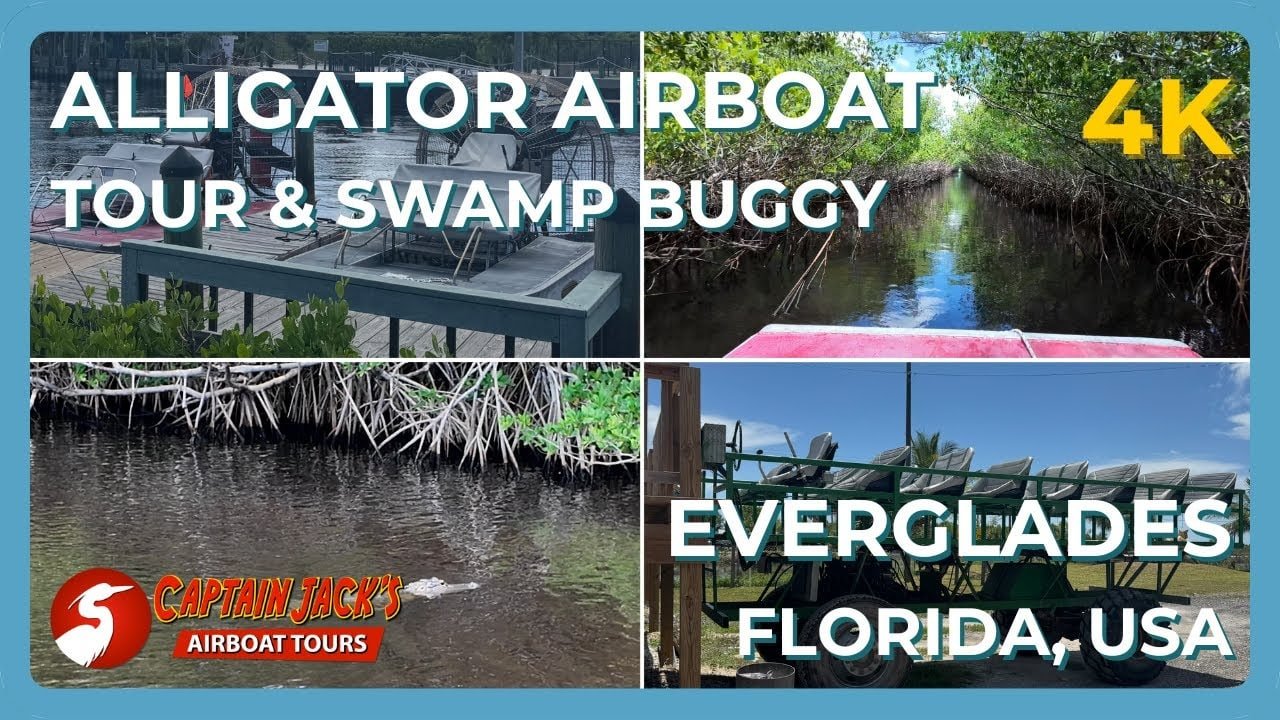
The family operations in the Everglades corridor are not selling an experience in the way that most tourism infrastructure sells an experience. They are maintaining a relationship with a specific place and offering access to that relationship for as long as the place holds and the family holds and the economics don’t finally break the arrangement. All three of those conditions are under pressure in ways that would require a separate piece to address properly. The federal permit environment for airboat operations has been contentious for decades. The insurance costs for wildlife exhibits have climbed in ways that press hard on margins that were never generous. The water itself is changing, slowly, in ways that the people who know it best are the first to notice and often the last to be consulted about.
I sat one afternoon at the edge of the swamp behind Wooten’s, the light going gold and the air cooling slightly with the approach of evening, and watched an anhinga dry its wings on a cypress branch with the still patience of something that has been doing this for longer than I can comfortably imagine. The people running the boats behind me had been doing their version of this for three generations. The bird had been doing its version for considerably longer. The swamp received both of them without distinction.
What I believe about these family operations, after enough visits to have moved past the version of them that travel writing produces, is that they are not primarily tourism businesses. They are the accumulated evidence of what it means to commit to a place over time, and what that commitment eventually looks like from the outside, which is a fluency that cannot be purchased or hurried or adequately described to someone who has not been in the boat.
You notice it, or you don’t. But it’s there.

Donald Reeves writes about Everglades City the way the place deserves to be written about: without the brochure language, without the manufactured wonder, and without pretending that a town of 400 people sitting at the edge of a swamp is something it is not.
He has spent considerable time in Collier County’s oldest settlement, arriving during stone crab season when the waterfront smells of brine and work, and returning in the off-season when the tourists are gone and the town goes quiet in the particular way that only genuinely remote places can. He has paddled the mangrove tunnels of the Ten Thousand Islands, eaten at places with no hours posted on the door, and spoken at length with fishing guides who navigate these waters by memory rather than chart.
His writing on Everglades City FL covers everything from tidal fishing conditions and kayak trails to lodging, local history, and the complex past that most Florida travel content carefully avoids.
He writes to give readers the honest version.