
The weekend before Memorial Day, I counted eleven vehicles with out-of-state plates parked along the waterfront in forty minutes. That is not a large number by any Florida resort standard. In Everglades City, with its single road in and a permanent population under five hundred, it registers differently.
The AAA projection for Memorial Day 2026 was forty-five million Americans traveling at least fifty miles from home. Thirty-nine million of them were driving, and Florida hotel occupancy in key regions approached ninety percent. The national average gas price sat above four-fifty a gallon. People paid it anyway, which tells you something about how badly people needed to leave wherever they were.
Everglades City is not on the AAA list of top destinations. Orlando and Miami absorb the direct volume. What this town receives is the overflow: people who drove to Naples or Marco Island and kept going because they saw the sign on the Tamiami Trail. They arrive without much context and with expectations formed by something they read on their phone two hours earlier.
What that looks like on the ground is a particular kind of crowding. It is not the concentrated surge of a beach town on a Saturday in July. It is dispersed and semi-accidental, people who did not specifically plan to be here and are not entirely sure what they came for. They fill the parking area near the waterfront and stand at the edge of the water looking out toward the islands.
I was here one Memorial Day weekend when a man stopped me near the boat launch and asked which tour company I would recommend. I gave him a name, and then he asked how long the tour was and whether there was anywhere air-conditioned to wait. I told him the honest answer. He thanked me and drove back toward Naples, which was probably the right decision for both parties.
The town does not reshape itself for this volume. That is both its integrity and its limitation. The restaurants that exist here exist for the people who live and work here, and they do not expand capacity for a holiday weekend. Triad Seafood operates on its own schedule, and the places with no hours posted on the door do not add hours for a national holiday.
The result is that the few establishments the town has get genuinely overwhelmed. Visitors who expected Florida ease and service find something that does not run that way.
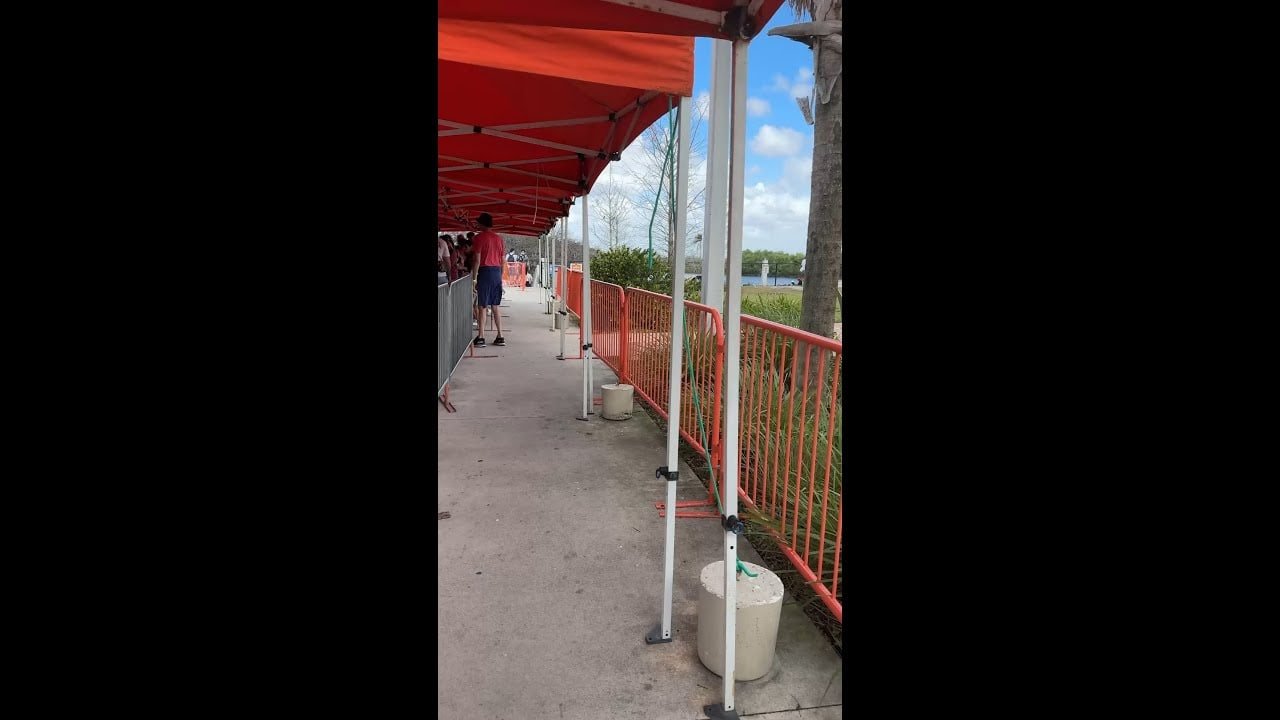
What unsettled me one year was realizing how little of the Memorial Day traffic reaches the people it would most benefit. The fishing guides, the airboat operators, the people whose livelihoods depend on visitors staying more than two hours: none of these capture walk-in weekend traffic. They require advance booking and prior knowledge that most impulse visitors from the highway do not arrive with.
The visitors who turn off on impulse spend money at the waterfront and leave. The people with real roots in this water economy see a weekend of cars and not much else.
The summer season that Memorial Day officially inaugurates does reach Everglades City eventually. June brings paddlers, and stone crab season ends in May so the commercial fishermen shift their attention. July is quiet in a way that feels earned rather than empty. The low tide over mangrove mud at dawn, the mullet jumping in the canal at dusk: this is what the town is when the crowd has passed.
The forty-five million figure and the record projections belong to a different Florida than this one. They belong to the Florida of hotel occupancy rates and airport passenger counts and outlet mall parking structures. Everglades City sits adjacent to that economy without being inside it, receiving its edges and tolerating them with the patience of something that has been here much longer.
What I have come to believe about this place is that its relationship to mass tourism is structural incompatibility rather than deliberate resistance. It cannot be what forty-five million traveling Americans are searching for, and it was never designed to be. The road in is one road for a reason.
The town behind it is a different proposition from the Florida those forty-five million had in mind. That difference is not incidental. It is the whole point.

Donald Reeves writes about Everglades City the way the place deserves to be written about: without the brochure language, without the manufactured wonder, and without pretending that a town of 400 people sitting at the edge of a swamp is something it is not.
He has spent considerable time in Collier County’s oldest settlement, arriving during stone crab season when the waterfront smells of brine and work, and returning in the off-season when the tourists are gone and the town goes quiet in the particular way that only genuinely remote places can. He has paddled the mangrove tunnels of the Ten Thousand Islands, eaten at places with no hours posted on the door, and spoken at length with fishing guides who navigate these waters by memory rather than chart.
His writing on Everglades City FL covers everything from tidal fishing conditions and kayak trails to lodging, local history, and the complex past that most Florida travel content carefully avoids.
He writes to give readers the honest version.