
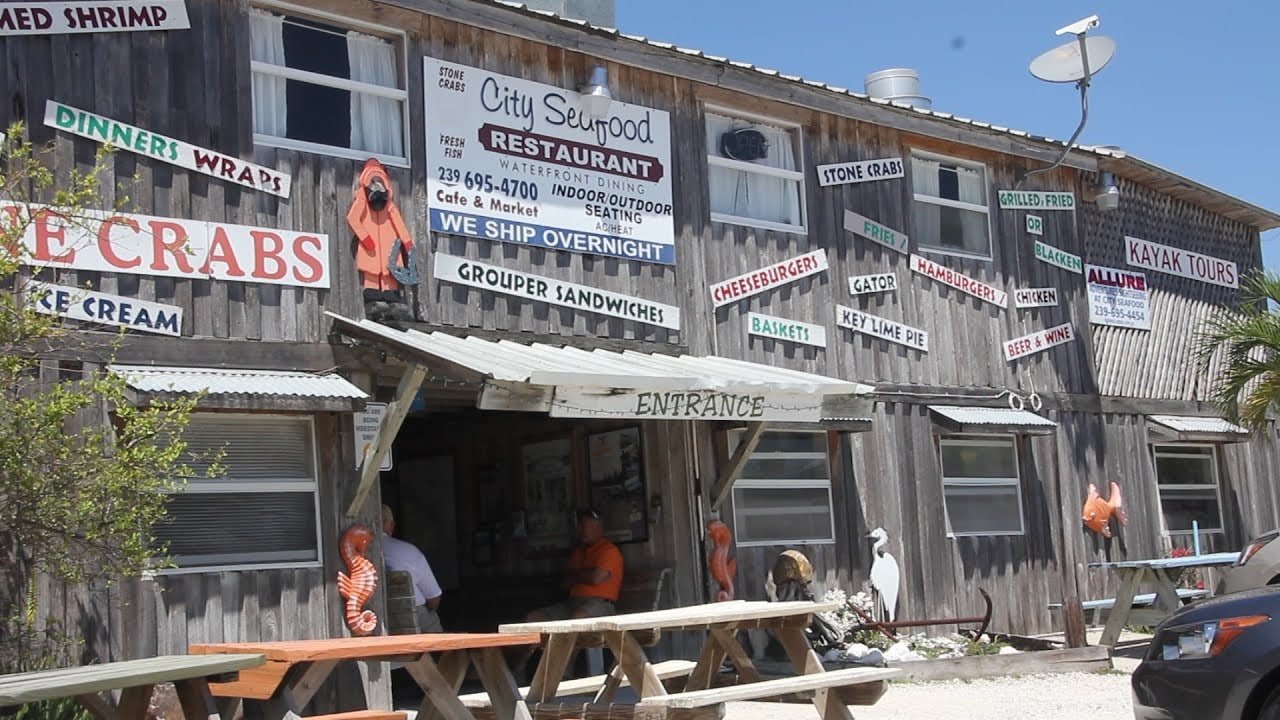
The traps go out before first light, which means the boats go out before first light, which means if you are standing on the waterfront at five-thirty in the morning in October you can watch the stone crab fleet leave the way generations of fleets have left from this place, running lights moving south through the canal toward the islands, the engine sound fading into the dark. The air at that hour smells like diesel and brine and the particular low-tide note of mangrove mud that has been absorbing and releasing the warmth of September for months and is only now beginning to let it go. It is a working smell. The kind that does not appear in the travel content about this place, which tends toward the late afternoon light on the water and the roseate spoonbills and the paddlers in the mangrove tunnels, all of which are real but none of which capture what Everglades City most essentially is, which is a working waterfront that has survived things that would have ended most places.
Three things, in the span of forty years. I want to name them plainly because they do not usually get named in the same sentence.
In 1983 the Drug Enforcement Administration conducted what was at the time one of the largest drug busts in Florida history, and a significant portion of Everglades City’s adult population was arrested for cocaine smuggling. The boats and the waterways and the knowledge of the Ten Thousand Islands that had served the fishing industry for decades had been repurposed, under the particular economic pressures of the early 1980s when shrimping prices had collapsed and the fishing life that had sustained this community for generations had stopped paying enough to sustain it. I am not excusing what happened. I am describing the context, which is different, and which the outside coverage of the scandal largely omitted in favor of a simpler story about a town gone wrong.
When I asked a man at the docks about the 1983 arrests, a man whose father had been among those charged, he was quiet for a moment and then said something I have thought about since. He said that the outside world had decided what kind of story it was before it arrived to tell it, and that the story it told was accurate in its facts and completely wrong in its proportions. He said the town had spent years being defined by a thing that had lasted maybe three years and that had happened because a way of life that had worked for a century and a half had stopped working, and that nobody writing about it from the outside had seemed particularly interested in that part. He was not angry. He was stating a fact about narrative and proportion that I found difficult to argue with.
Hurricane Irma came thirty-four years later, in September 2017, and took the storm surge over most of the town’s ground floors and left the kind of damage that gets calculated in millions and paid for, slowly and partially, in years. The federal disaster response was what it was, which was inadequate in the specific ways that disaster responses tend to be inadequate for small, remote communities with limited political leverage. The town fixed itself largely with its own hands and its own judgment. This is not a metaphor. It is what happened. And when I was there in the months that followed, when the smell of drying lumber and marine epoxy had replaced the usual waterfront smell, there was something in the quality of the work being done that was recognizable if you had paid any attention to the history. This was a community that had been solving its own problems for a long time.
The pandemic arrived in March 2020 in the middle of stone crab season, which runs from mid-October to the first of May. That timing was not incidental. Stone crab is the economic engine of this waterfront and the restaurants and the wholesale buyers and the retail operations that move the catch are all interconnected in ways that a sudden disappearance of both supply chain and customer made immediately apparent. I spoke to a woman who runs a small operation near the waterfront, not one of the larger outfits, who described the spring of 2020 with the matter-of-fact precision of someone who had been through worse and knew how to inventory damage without dramatizing it. She said the hardest part was not knowing how long it would last. She said the town had learned from previous experiences that you do not wait to find out how long something will last before you start figuring out how to get through it.
What unsettled me in that conversation was not the hardship she described but the implicit comparison she was making. The pandemic was bad. It was also, in her accounting, one in a sequence of things that had required the same basic response: assess what you have, use what works, replace what is gone, continue. The sequence she was describing had been going on for longer than I had been paying attention to this place.
There is a version of this town’s history that presents each of these events as a chapter in a story of decline and recovery, resilience and renewal, the language of the feel-good narrative arc. I have read that version. It is not wrong but it is incomplete in a way that matters, because it treats the difficulties as exceptional when the people here treat them as the expected cost of living in a place that the rest of Florida has always either ignored or misunderstood.
The boats come back in the afternoon with the traps they have pulled and the catch they have sorted and they tie up and unload and the work of the day is visible in the way it always has been here, without ceremony, without anyone explaining it to you.
That is what this place has always been. The ceremonies are for visitors.
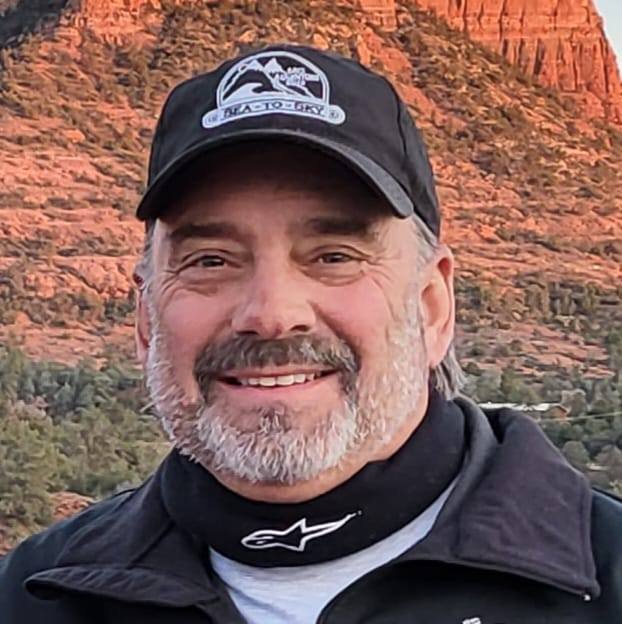
Donald Reeves writes about Everglades City the way the place deserves to be written about: without the brochure language, without the manufactured wonder, and without pretending that a town of 400 people sitting at the edge of a swamp is something it is not.
He has spent considerable time in Collier County’s oldest settlement, arriving during stone crab season when the waterfront smells of brine and work, and returning in the off-season when the tourists are gone and the town goes quiet in the particular way that only genuinely remote places can. He has paddled the mangrove tunnels of the Ten Thousand Islands, eaten at places with no hours posted on the door, and spoken at length with fishing guides who navigate these waters by memory rather than chart.
His writing on Everglades City FL covers everything from tidal fishing conditions and kayak trails to lodging, local history, and the complex past that most Florida travel content carefully avoids.
He writes to give readers the honest version.