
The Drive You Are Not Ready For
I was somewhere west of Ochopee, the sun still low and the Tamiami Trail running absolutely straight in both directions as far as I could see, when the anhinga appeared on a fence post at the edge of the road. It was holding its wings open the way they do, drying them, and it stayed completely still as I slowed and then stopped beside it. We were perhaps four feet apart. It looked at me with one eye and then looked away, and I sat there in the idling car for longer than I can account for, watching a bird dry its wings in the early light over the Everglades, and I thought: the itinerary I had written in my notebook before I left was already wrong.
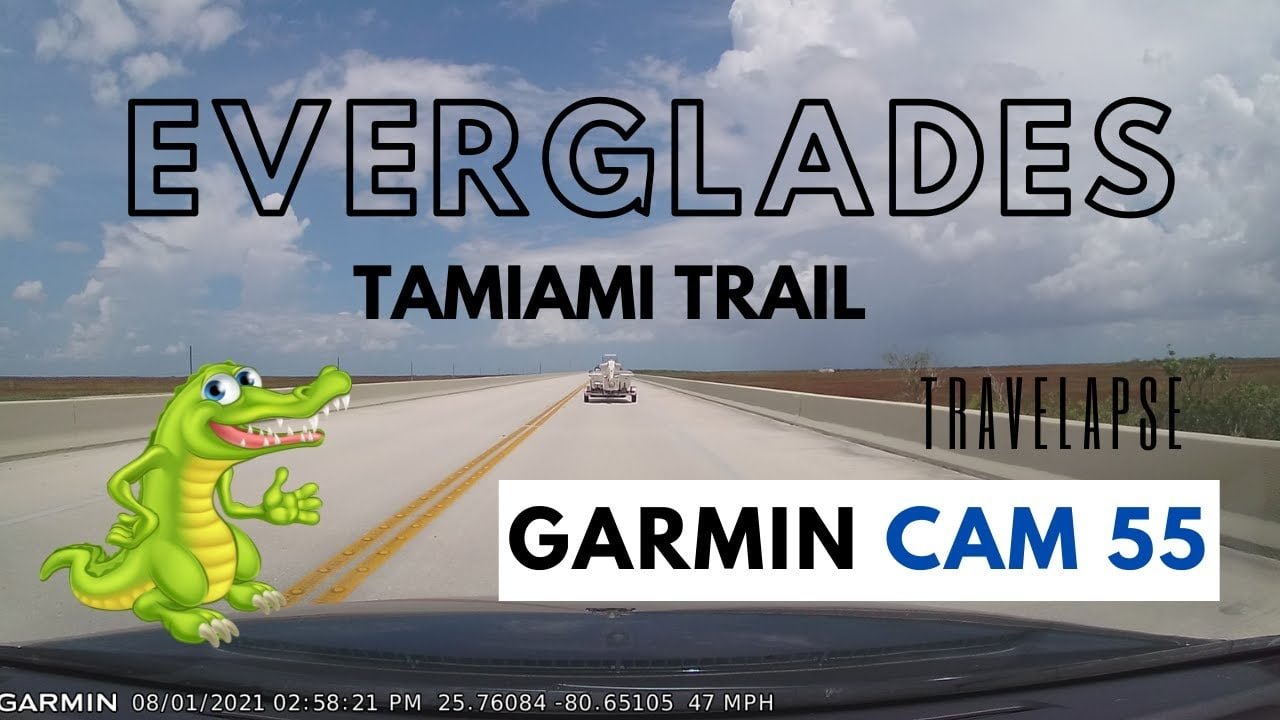
The Tamiami Trail, for anyone who has not driven it, is one of those roads that does something to your sense of distance and time that is difficult to explain to someone who has only experienced it on a map. It was completed in 1928 and it runs for two hundred and seventy-five miles across the southern end of Florida, from Miami to Naples, cutting through the River of Grass with a bluntness that the engineers who built it by hand through mosquito-thick wilderness probably did not think of as violent, but which reads that way now. The road sits on a raised berm that interrupted the natural sheet flow of water across the Everglades for decades, and the restoration projects that have been trying to correct this are still underway, still incomplete, still arguing with hydrology that does not negotiate. You are driving, in other words, through an active conversation between human infrastructure and a landscape that has been attempting to reassert itself for nearly a century.
Most of the people who drive this road are on their way somewhere. Naples to Miami for a flight. Everglades City for the weekend. Big Cypress for a camping permit. The drive is treated as transition, as the space between origin and destination, and I understand why. There are long stretches where the sawgrass extends to the horizon in every direction and nothing changes and the mind goes to other things. But the drive is not empty. It is dense with information if you are moving at the right speed and paying the right kind of attention.
The airboat tours launch from the edges of the road at intervals, and the sound of them carries across the flat water for longer than seems physically possible. I have spoken to several of the operators who run these businesses, and what they share, almost uniformly, is a relationship with the federal permit system that is complicated by years of inconsistent enforcement, shifting regulations, and the particular frustration of people who know a piece of land intimately being told by people who do not how they are allowed to use it. This is not a simple story and I am not interested in flattening it. What I will say is that the knowledge these operators carry about the Everglades, its seasonal rhythms, its animal populations, the specific channels that run with water in the wet season and dry to mud in the dry, is not the kind of knowledge that can be downloaded or acquired in a weekend, and it deserves more serious treatment than it typically receives in the content that floats around this road.
You turn south at the junction near Monroe Station and State Road 29 begins. The change is immediate. The road narrows. The landscape shifts from open sawgrass to a denser tangle of cypress and then, as you get closer to town, mangrove. The phone signal, which was unreliable on the Trail, becomes absent. You are arriving somewhere that is not waiting for you.
What unsettled me on a recent drive was not the wildness of this approach, which I had expected, but a conversation I had when I reached Everglades City itself, at a small operation off the main waterfront where a man I had not met before was untangling a cast net on the dock. He had been born here. He was in his sixties. I asked him what he made of the increasing interest in the town from visitors and from media, and he was quiet for a moment before he said that it was fine, that people could come, but that the thing most of them were coming for was a version of the place that existed in someone else’s photograph, and when they got here and found the actual town, some of them were disappointed. He said this without bitterness. It was an observation, not a complaint.
I thought about that for the rest of the afternoon, sitting at the edge of the water while the light went gold and flat the way it does here in the late afternoon, turning the channel into something that looks almost unreal, and I think what he was describing is the specific damage that travel content does when it optimises a place for a feeling rather than a fact. The photographs are not lies. The roseate spoonbill is real. The stone crab at Triad is as good as anything you will find in a restaurant that charges three times as much. The mangrove tunnels close overhead and the silence inside them is a different quality of silence from any other.
But the road that leads to all of this is the drive itself, and the drive asks something of you that most itineraries forget to mention.
It asks you to be somewhere you cannot fully understand, moving through a landscape that is older and more complicated than your plans for it, and to find that sufficient.
That is not a small ask. Most people are not prepared for it. The ones who are tend to come back.

Donald Reeves writes about Everglades City the way the place deserves to be written about: without the brochure language, without the manufactured wonder, and without pretending that a town of 400 people sitting at the edge of a swamp is something it is not.
He has spent considerable time in Collier County’s oldest settlement, arriving during stone crab season when the waterfront smells of brine and work, and returning in the off-season when the tourists are gone and the town goes quiet in the particular way that only genuinely remote places can. He has paddled the mangrove tunnels of the Ten Thousand Islands, eaten at places with no hours posted on the door, and spoken at length with fishing guides who navigate these waters by memory rather than chart.
His writing on Everglades City FL covers everything from tidal fishing conditions and kayak trails to lodging, local history, and the complex past that most Florida travel content carefully avoids.
He writes to give readers the honest version.