
I was three hours into a mangrove tunnel somewhere north of Rabbit Key Pass when I lost the markers. Not dramatically. The channel simply narrowed past the point where I was confident I was still in it, and the canopy had closed overhead in a way that made the sky a suggestion rather than a reference point, and the GPS was doing what GPS does in there, which is display your position with a confidence that the surrounding evidence does not support. I stopped paddling and listened. The water was the colour of tea. Something moved in the roots to my left, a mullet probably, the disturbance travelling along the surface in a V that faded before I could track it. The smell was low tide and mangrove mud and something older underneath both of those, vegetable and mineral together, the smell of organic matter in the process of becoming something else.
I sat there for perhaps ten minutes before I found the next marker. During those ten minutes I did not feel afraid. I felt the particular quality of attention that comes when the ordinary systems of navigation stop working and you have to use something slower and less certain. That quality of attention is, I have come to think, the actual subject of the Wilderness Waterway. The hundred and ninety-nine miles of paddling route from Everglades City south to Flamingo is not primarily a scenic experience, though the scenery at certain hours, the flat gold light of late afternoon over open water, the way a brown pelican drops into a dive with a commitment that looks like surrender, is unlike anything else in North America. It is primarily an exercise in presence. The route demands it. The route will not proceed without it.
Almost nobody completes the full route. The reasons are practical and they are real: ten days minimum on the water, no resupply points, camping on chickee platforms over open water or on beaches that the tide reconfigures seasonally, heat in any month that is not winter, insects in any month that is not February, weather that changes faster than a paddler can respond to it over open water. The National Park Service registers between a few dozen and a couple hundred full-route completions in a typical year. For a route of this scale and this character, on a continent where the outdoor recreation industry generates billions of dollars and produces a corresponding volume of content, that number is genuinely small.
I have never completed the full route in a single trip. I have paddled significant sections of it over multiple visits, which is a different experience and I want to be honest about that difference. The people I know who have done it continuously, sleeping on the chickees and making their daily mileage and managing their water and reading the tidal windows in the open bays, describe the later days in terms that have less to do with scenery than with a shift in how the mind organises time. By day seven, one guide told me, you stop thinking in terms of what comes next and start thinking only about what is directly in front of you, the water, the wind direction, the next marker, the position of the sun. He said it without nostalgia. He said it like a fact.
What surprised me on my first extended section of the route was how little the experience resembled what I had read about it. The paddling content about the Wilderness Waterway tends to emphasise the wildlife, which is legitimate, the bird life in particular is extraordinary in a way that continues to resist adequate description, a roseate spoonbill feeding in the shallows at dawn operates at a frequency that no photograph has yet captured correctly, the colour too saturated to be believed and then exactly that colour when you see it in person. But the wildlife framing puts the paddler in the position of observer moving through a landscape, and that is not quite what the route does to you. The route puts you inside the landscape in a way that requires the landscape’s cooperation to navigate. You are not watching it. You are negotiating with it.
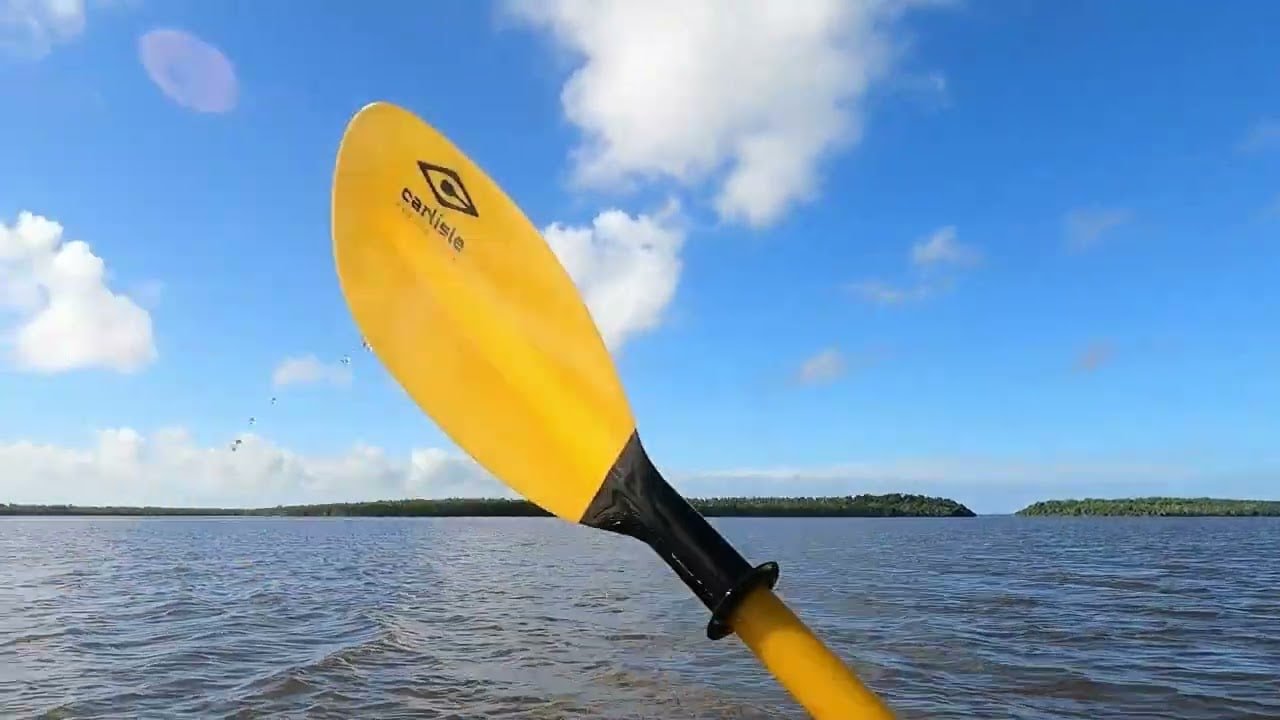
The infrastructure of the route is minimal and deliberately so. The chickee platforms are utilitarian, wood and steel over water, outhouses at one end. The campsite beaches are cleared to the degree that the tide and the vegetation permit, which is to say not very cleared. There are no facilities at the intermediate stops. This is the correct decision and I hope it does not change, because the absence of infrastructure is not a gap in the experience. It is the experience. The moment you accept that there is no option other than the one directly in front of you, the water and the paddle and whatever the weather is doing, something adjusts in how the hours feel.
Everglades City is the northern terminus of the route, which means it is where most people start, and it is where the preparation happens, the permit pickup, the final resupply, the last conversation with a ranger or a fishing guide who knows these waters in the way that comes only from years of paying attention. The town is suited to this function in ways that more visited places are not. It does not perform anything. It is simply there, at the end of the road, where the water begins.
What I believe about the Wilderness Waterway, after enough time with it to have a considered opinion, is that it exists at a scale and a difficulty level that naturally limits the number of people who will attempt it, and that this is not a problem requiring a solution. Some places are worth protecting from the volume of attention that would change them. This is one of them, and the ninety-nine miles of water between Everglades City and Flamingo have so far protected themselves.
Donald Reeves writes about Everglades City the way the place deserves to be written about: without the brochure language, without the manufactured wonder, and without pretending that a town of 400 people sitting at the edge of a swamp is something it is not.
He has spent considerable time in Collier County’s oldest settlement, arriving during stone crab season when the waterfront smells of brine and work, and returning in the off-season when the tourists are gone and the town goes quiet in the particular way that only genuinely remote places can. He has paddled the mangrove tunnels of the Ten Thousand Islands, eaten at places with no hours posted on the door, and spoken at length with fishing guides who navigate these waters by memory rather than chart.
His writing on Everglades City FL covers everything from tidal fishing conditions and kayak trails to lodging, local history, and the complex past that most Florida travel content carefully avoids.
He writes to give readers the honest version.