
The Museum of the Everglades is a free history museum located at 105 W Broadway Avenue in Everglades City, Florida. It covers over 2,000 years of human history in Southwest Florida through permanent and rotating exhibits. The museum is open Tuesday through Saturday, 9 AM to 4 PM.
What Is the Museum of the Everglades?
The Museum of the Everglades is part of the Collier County Museums system. It is devoted to displaying local history from early Native American times to the present. It is listed on the National Register of Historic Places and is located 35 miles east of downtown Naples. For context, see our previous guide on Gulf Coast Visitor Center Everglades City: 5 Essential Facts and Activities for Every Visitor.
The museum sits inside a restored 1920s building. Admission to all Collier County Museums is free, including the Museum of the Everglades.
What Is the History of the Museum of the Everglades Building?
The museum building was originally constructed by influential landowner Barron Collier in 1927 to house the community laundry. The laundry was a busy enterprise until 1942, when a lack of staff and changing demographics made it unviable.
After that, the building served as an insurance office, barber shop, pizzeria, and a place of worship before the Everglades Women’s Club purchased it and used it as a meeting hall. In 1988, the club donated the historic building to Collier County for use as a museum.
The Museum of the Everglades opened on April 26, 1998, for the Tamiami Trail’s 70th anniversary. In 2001, it was registered on the National Register of Historic Places.
How Did Everglades City Become the Museum’s Home?
Everglades City, once reachable only by boat, became a hub in 1923. Barron Collier used it as headquarters for building the Tamiami Trail (US 41). The town served as Collier County’s first seat until 1962.
The city lost its county seat status after Hurricane Donna devastated it in 1960, and the county seat was moved to Naples shortly after.
What Are the 4 Main Exhibit Areas at the Museum of the Everglades?
The museum opens into a large room filled with Calusa Native American artifacts, Seminole Native American garments, the history of the first schools in the Everglades, and exhibits about pioneers, Hurricane Irma, and the Rod & Gun Club.
The 4 primary exhibit areas are:
- Native Peoples Gallery — Calusa and Seminole tribal history, artifacts, and garments
- Tamiami Trail Exhibition — Engineering history, photographs, and storyboards
- The Storter Collection — Pioneer records, words, pictures, and artifacts
- Everglades Laundry Room — Restored 1920s laundry equipment with period mannequins
What Does the Native Peoples Gallery Cover?
Exhibits on indigenous peoples — the Calusa, Seminole, and Miccosukee — cover their knowledge of the Everglades ecosystem, sustainable hunting and fishing practices, and how they used native plants and animals for food, shelter, and tools.
A scale model created by Seminole artist Brain Zepeda is prominently displayed for visitors.
What Is the Tamiami Trail Exhibition?
The Tamiami Trail (US-41) connected Tampa with Miami. Construction started in 1916 but took 12 years to complete due to formidable problems. Workers faced unbearable heat, snakes, mosquitoes, alligators, solid rock, and deep swamp terrain.
The Tamiami Trail took 13 years to build using 2.6 million sticks of dynamite and cost $8 million.
What Is the Storter Collection?
The Storter Collection provides a unique glimpse of Southwest Florida’s earliest historical accounts recorded in words, pictures, and artifacts. George Storter moved from northern Florida in 1881 to what is now Everglades City, where he farmed on the banks of the Barron River. He was joined in 1887 by his sons Robert Bembery and George Jr., who bought the homestead that later became the Rod and Gun Lodge.
What Local Industries Does the Museum of the Everglades Document?
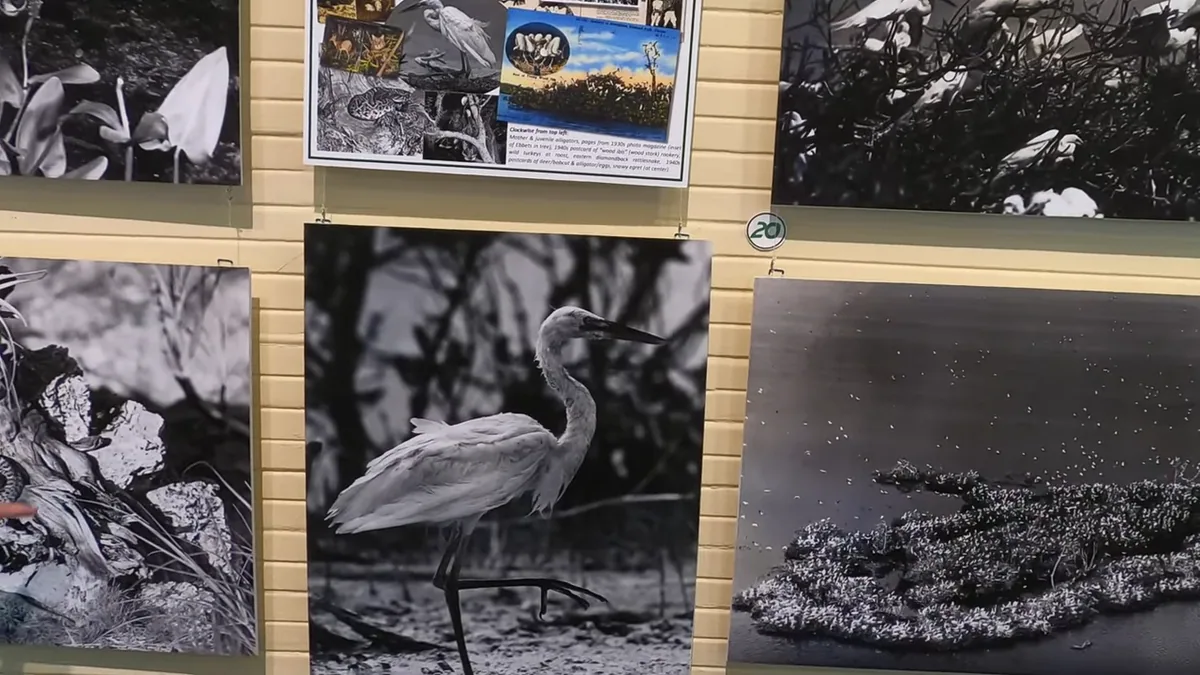
The museum covers local businesses that operated around Everglades City, including tomato growing, grapefruit canning, and the Bank of the Everglades, which operated from 1923 to 1962.
The museum also documents 3 industries tied directly to the city’s survival:
- Stone crab harvesting — A culinary staple that sustained generations of locals
- Pioneer fishing — Marine resources from the Gulf of Mexico and the Ten Thousand Islands
- Plume hunting — A significant 19th-century trade that shaped regional ecology
Visitor Information: What Do Visitors Need to Know Before Going?
|
Detail |
Information |
|---|---|
|
Address |
105 W Broadway Ave, Everglades City, FL 34139 |
|
Phone |
239-695-0008 |
|
Hours |
Tuesday–Saturday, 9 AM–4 PM |
|
Admission |
Free (donations appreciated) |
|
Distance from Naples |
35 miles east |
|
Tour Duration |
Approximately 1 hour (self-guided) |
|
Parking |
Available outside the building |
Staff are described as friendly and knowledgeable, adding value to visits through insights and willingness to answer questions.
What Makes the Museum of the Everglades Worth Visiting?
The museum delivers 3 measurable benefits for visitors:
- Historical depth — 2,000 years of Southwest Florida history in a single building
- Free access — No admission cost, unlike most regional museums
- Unique local context — Exhibits on pioneer communities, indigenous peoples, and landmark infrastructure unavailable in other Florida museums
The museum distills centuries of complex history into an approachable, engaging experience. Whether visitors are captivated by the ancient Calusa and Seminole peoples, fascinated by Barron Collier’s vision, or intrigued by Prohibition-era rum-running, the museum delivers a comprehensive picture.
How Does the Museum of the Everglades Connect to Broader Florida History?
Museum curator Thomas Lockyear states that the Tamiami Trail “changed Florida forever” by expanding the economy and allowing people to move across the state by automobile.
The museum connects 3 major threads of Florida’s development:
- Indigenous displacement — The road’s construction drove Seminole and Miccosukee peoples from their waterway-dependent homes
- Economic expansion — Barron Collier’s projects transformed a remote swamp town into Collier County’s first seat of government
- Environmental change — Trail construction altered the natural water flow of the Everglades, producing ecological effects that continue today
The Museum of the Everglades in Everglades City preserves a record of Florida’s most consequential period of frontier development. It joined the National Register of Historic Places in 2000 and remains open to the public as part of the Collier County Museums system. For visitors traveling through Southwest Florida, it is a direct, fact-grounded entry point into the forces that shaped the region from 2,000 years of indigenous civilization through to the 20th century.

Donald Reeves writes about Everglades City the way the place deserves to be written about: without the brochure language, without the manufactured wonder, and without pretending that a town of 400 people sitting at the edge of a swamp is something it is not.
He has spent considerable time in Collier County’s oldest settlement, arriving during stone crab season when the waterfront smells of brine and work, and returning in the off-season when the tourists are gone and the town goes quiet in the particular way that only genuinely remote places can. He has paddled the mangrove tunnels of the Ten Thousand Islands, eaten at places with no hours posted on the door, and spoken at length with fishing guides who navigate these waters by memory rather than chart.
His writing on Everglades City FL covers everything from tidal fishing conditions and kayak trails to lodging, local history, and the complex past that most Florida travel content carefully avoids.
He writes to give readers the honest version.